
Key Takeaways
- A portable diesel screw compressor that runs but will not load should be diagnosed as a control-chain problem first, not automatically as a failed inlet valve. Trace the sequence in order: pressure signal → controller load command → solenoid → pneumatic control circuit → inlet valve → pressure build-up.
- The first useful measurement is separator/sump pressure versus outlet pressure. Low pressure at both points suggests a genuine loading or inlet-control problem; high separator pressure with little or no outlet pressure points instead toward the MPV or another discharge restriction.
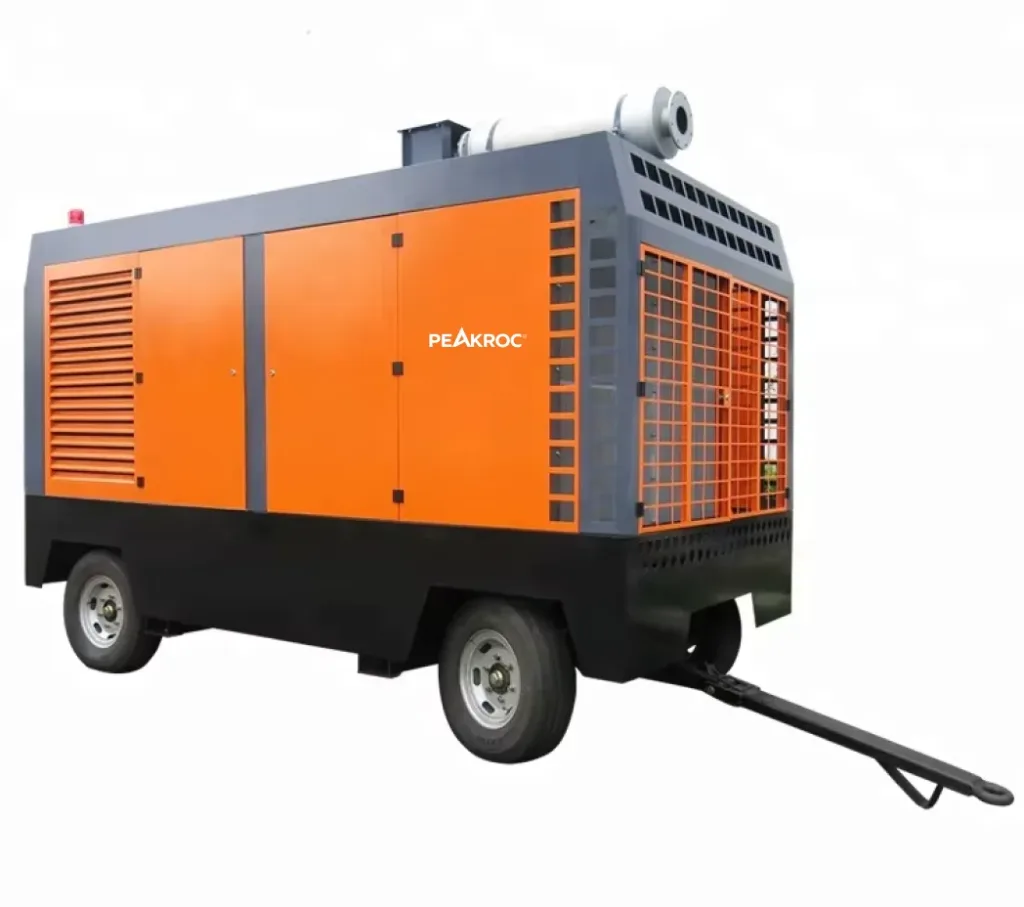
- The same diagnostic principle applies across different portable screw-compressor sizes. For example, the Peakroc® PRMD-1008 10 m³/min, 8 bar portable diesel compressor and the larger PRMD-2013 20 m³/min, 13 bar portable diesel compressor both depend on correct load/unload control, but the actual control pressures and service procedures must be checked for the specific model.
- Before replacing components, confirm whether the controller is actually requesting load. If the command is absent, investigate the pressure sensor, wiring, interlocks and controller. If the command is present but the expected pneumatic state does not reach the inlet valve, investigate the solenoid and control-air circuit before condemning the valve itself.
- Peakroc’s Portable Screw Air Compressor Troubleshooting Guide covers the wider field-diagnosis process, while the Minimum Pressure Valve Troubleshooting Guide explains the important high-vessel-pressure + low-outlet-pressure condition that can be mistaken for a true no-load fault.
- For buyers or fleet operators comparing different airflow and pressure classes, the complete Peakroc® Portable Air Compressor Range can be used to match the compressor to the application. Troubleshooting values such as unload pressure, pilot pressure and solenoid state should still come from the exact compressor’s service documentation rather than from a generic rule.
The diesel engine starts normally, but the compressor stays at idle or unloaded speed. System pressure does not rise and little useful air reaches the outlet.
Operators usually describe this as:
“The compressor won’t load.”
That description identifies the symptom, not the failed part.
In a rotary screw compressor, full loading normally depends on several electrical, pneumatic and mechanical components working in sequence. A faulty pressure signal can prevent the controller from requesting load. A healthy controller can command load while a failed solenoid prevents the pneumatic circuit from responding. Correct control pressure can reach the inlet valve while the valve itself remains mechanically stuck.
The fastest diagnostic method is therefore:
Pressure Pattern → Load Command → Solenoid → Control Air → Inlet Valve
First Confirm That It Really Is a No-Load Fault
Before removing any component, determine where pressure is being generated.
A useful first comparison is:
| Separator / Sump Pressure | Outlet Pressure | Main Diagnostic Direction |
|---|---|---|
| Low | Low | Loading/control system |
| Builds slowly | Low | Partial inlet opening, control leak, restricted intake |
| High | Near zero | MPV or discharge restriction |
| Normal | Normal but low flow | Intake restriction, partial inlet opening or excessive demand |
This distinction is important because “no air at the outlet” does not always mean the compressor failed to load.
Peakroc’s existing field guide identifies a true fails-to-load condition as an engine running while the machine remains unloaded and internal pressure fails to build normally. It directs technicians toward the intake valve, solenoid/control circuit and pressure signal.
A stuck-closed minimum pressure valve produces a very different internal condition:
Separator Pressure: HIGH
Outlet Pressure: LOW / ZERO
The airend is already compressing air; it simply cannot discharge it normally. Peakroc’s MPV guide uses this pressure difference as a primary way to separate MPV failure from a genuine loading fault.
That gives us the most useful first rule:
Low sump + low outlet: investigate loading. High sump + low outlet: investigate the discharge path.
Trace the Load Command From the Controller to the Inlet Valve
Once low internal pressure confirms a likely loading problem, troubleshoot in the same direction that the control system operates.
A conventional load/unload system uses an inlet valve to control how much air enters the airend. CAGI describes the loaded state as the inlet valve being open and supplying rated capacity; when the machine unloads, the inlet valve closes and many systems simultaneously open a blowdown path to reduce internal pressure.
The practical chain is:
Pressure Sensor → Controller → Load Solenoid → Control Circuit → Inlet Valve
1. Confirm the Controller Is Requesting Load
Check the operating display before assuming anything mechanical has failed.
If actual system pressure is below the normal load point but the controller still shows UNLOAD, investigate the pressure signal, interlocks and controller logic first.
A faulty pressure sensor can report a higher pressure than actually exists. The controller then has a perfectly logical reason to keep the compressor unloaded.
Peakroc recommends comparing the controller’s pressure reading with a reliable pressure reference before replacing valves.
The diagnostic distinction is simple:
No load command → investigate sensor/controller/interlock
Load command present → move downstream to solenoid and pneumatic control
This prevents mechanical parts from being changed to solve an electrical or sensing problem.
2. Verify Solenoid Response
The loading solenoid converts the controller command into a change in the pneumatic control circuit.
The reference troubleshooting article identifies loading-solenoid failure as one of the main reasons a screw compressor can show a load request while failing to build pressure. It also identifies clogged intake filters, stuck inlet valves, control-line leakage and minimum-pressure problems as related causes.
A solenoid can fail through a damaged coil, poor electrical connection, contaminated spool or blocked pilot passage.
But one caution matters:
Do not assume that “energized” always means “inlet valve open.”
Published compressor control manuals show different arrangements. Some circuits use the solenoid to admit pilot pressure; others load by venting or redistributing pilot pressure.
Therefore the correct test is not simply:
“Does the solenoid click?”
It is:
Does the electrical command create the pneumatic state specified for this compressor?
Use the actual pneumatic schematic.
3. Check the Control-Air Path
Small pilot lines can stop a very large compressor from loading.
Look for blocked orifices, kinked tubing, cracked hoses, loose fittings, oil/sludge contamination and pneumatic leakage.
If the controller commands load and the solenoid changes state, but the expected control condition never reaches the inlet-valve actuator, the inlet valve itself should not yet be condemned.
The fault is still upstream.
That gives a clean diagnostic progression:
Signal present + no pneumatic change → solenoid/control circuit
Correct pneumatic condition at actuator + no valve movement → inlet valve
This is a much more reliable method than changing parts by probability.
When the Inlet Valve Is Actually at Fault
Only after the control chain has been verified should the inlet valve become the primary suspect.
Typical mechanical problems include contamination, carbon deposits, sticking piston or shaft, damaged seals, worn actuator parts or damaged linkage.
A completely stuck valve may produce:
engine running → load command present → almost no pressure rise
A partially opening valve is more subtle.
The compressor may load and build pressure, but fail to achieve expected FAD. The operator may report that pneumatic tools or drilling equipment feel weak even though the controller says the compressor is loaded.
Before diagnosing a partially stuck inlet valve, also check the intake air filter.
The reference article identifies severe intake-filter restriction as another reason a compressor cannot take in enough air to build normal pressure.
The useful distinction is:
Valve does not open at all → loading failure
Valve opens only partly → low capacity / slow pressure build
A visual check alone may not be sufficient. The inlet mechanism needs to be evaluated while the control system is requesting the appropriate operating state, following the manufacturer’s procedure.
What Low Sump Pressure Actually Tells You
Low separator/sump pressure is useful because it confirms that the compressor has not established its normal internal compression condition.
It does not, by itself, identify the failed component.
Depending on compressor design, internal pressure may also participate in the pneumatic control circuit, oil circulation and minimum-pressure functions.
If internal pressure remains abnormally low, ask:
Is the inlet valve opening?
If not:
Is the correct control condition reaching it?
If not:
Is the solenoid receiving the correct command?
That step-by-step approach avoids using a generic number such as:
“The compressor must have exactly X bar of sump pressure while unloaded.”
Different control systems use different pressure levels and valve logic.
Use the service specification for the exact compressor.
Peakroc Field Diagnosis: Two Machines Can Have the Same Operator Complaint but Different Faults
Peakroc’s existing troubleshooting material illustrates why pressure location is more valuable than the phrase “no air output.”
In the first diagnostic pattern:
engine running → sump pressure stays low → outlet pressure stays low
The investigation moves toward:
controller / sensor → solenoid → control line → inlet valve.
The airend cannot produce normal compressed-air output if the inlet system never allows sufficient atmospheric air into it.
In the second pattern:
engine running → sump pressure becomes high → outlet remains near zero
the loading system is no longer the logical first suspect.
The airend is already producing pressure.
Peakroc’s MPV troubleshooting material directs the diagnosis toward:
MPV → separator outlet → downstream restriction.
The operator may describe both machines exactly the same way:
“It runs, but there is no air.”
The pressure measurements tell the technician that they are two completely different failures.
That is the lesson worth carrying into field maintenance:
Diagnose from system behavior before diagnosing from component reputation.
Repair Only After the Fault Has Been Isolated
Once the failed stage has been identified, the repair may be simple.
A loading fault could require cleaning a blocked pilot line, repairing wiring, replacing the correct solenoid, correcting a pressure-sensor fault or rebuilding a mechanically damaged inlet valve.
Before opening pneumatic lines or removing pressure-system components, however, stored compressed-air energy must be made safe.
OSHA’s hazardous-energy requirements include pneumatic energy and require hazardous stored or residual energy to be relieved, disconnected, restrained or otherwise rendered safe before covered maintenance begins; isolation must also be verified.
After repair, do not stop testing as soon as air appears at the outlet.
Verify the complete sequence:
Startup → Normal Unload → Load Command → Inlet Response → Sump Pressure Rise → Stable Outlet Pressure → Unload → Blowdown → Shutdown
Also confirm that there is no pressure hunting, abnormal temperature rise or unexpected leakage.
A repair is complete when the compressor has recovered normal load and unload behavior, not merely when it produces air once.
Final Recommendation
When a portable diesel screw compressor will not load, avoid starting with:
“Which valve should I replace?”
Start with:
“Where is pressure being created, and where does the control sequence stop?”
If both sump and outlet pressures remain low, trace:
Pressure Signal → Controller → Solenoid → Control Circuit → Inlet Valve
If separator pressure is high but outlet pressure remains near zero, move away from the loading controls and investigate the MPV or discharge path.
If the controller requests load and the correct pneumatic condition reaches the inlet actuator but the inlet valve still does not move, then the valve itself becomes the logical repair target.
The complete troubleshooting sequence is:
Confirm Pressure Pattern → Confirm Load Command → Test Solenoid Response → Verify Control Air → Inspect Inlet Valve → Rule Out MPV → Repair → Verify Full Cycle
The professional approach is not to replace the most common failed part first.
It is to identify the exact point where the loading sequence stops.
That usually leads to a faster repair, fewer unnecessary parts and a much clearer understanding of why the compressor failed.
FAQ
Why does my diesel screw compressor run but stay unloaded?
Common causes include a missing load command, faulty pressure sensor, failed loading solenoid, blocked or leaking control circuit, or a mechanically stuck inlet valve.
What should I check first when a compressor will not load?
Compare separator/sump pressure with outlet pressure. If both remain low, investigate the loading system. If separator pressure is high while outlet pressure is near zero, investigate the MPV or discharge path.
Can a bad pressure sensor prevent loading?
Yes. If it reports falsely high system pressure, the controller may intentionally keep the compressor unloaded even though actual pressure is low.
How do I know whether the solenoid or inlet valve is bad?
Confirm that the controller sends the expected command, then verify that the solenoid creates the correct pneumatic condition at the inlet-valve actuator. If the correct control condition reaches the actuator but the valve does not move, the inlet valve becomes the primary suspect.
Can a clogged air filter cause a compressor to appear not to load?
A severely restricted intake filter can reduce air intake enough to cause slow pressure build-up and poor capacity, although a completely unloaded machine usually requires further investigation of the control and inlet-valve system.
Can a stuck MPV be mistaken for a no-load problem?
Yes. A stuck-closed MPV can produce little or no outlet air even though separator pressure is high. That pressure pattern distinguishes it from a typical true loading failure.
Author

Mark Chen – Senior Mechanical Engineer, Peakroc®
Mark Chen is a senior mechanical engineer at Peakroc®, specializing in compressed air systems and drilling equipment for mining and construction applications. With over 15 years of field experience, he has led multiple projects on optimizing air delivery efficiency, equipment durability, and energy consumption.