
Key Takeaways
- A Factory Acceptance Test (FAT) verifies equipment before shipment. It helps buyers confirm that the compressor matches the approved specifications, performs correctly and meets agreed safety requirements. Understanding CFM, FAD, SCFM and ACFM is essential when reviewing performance data.
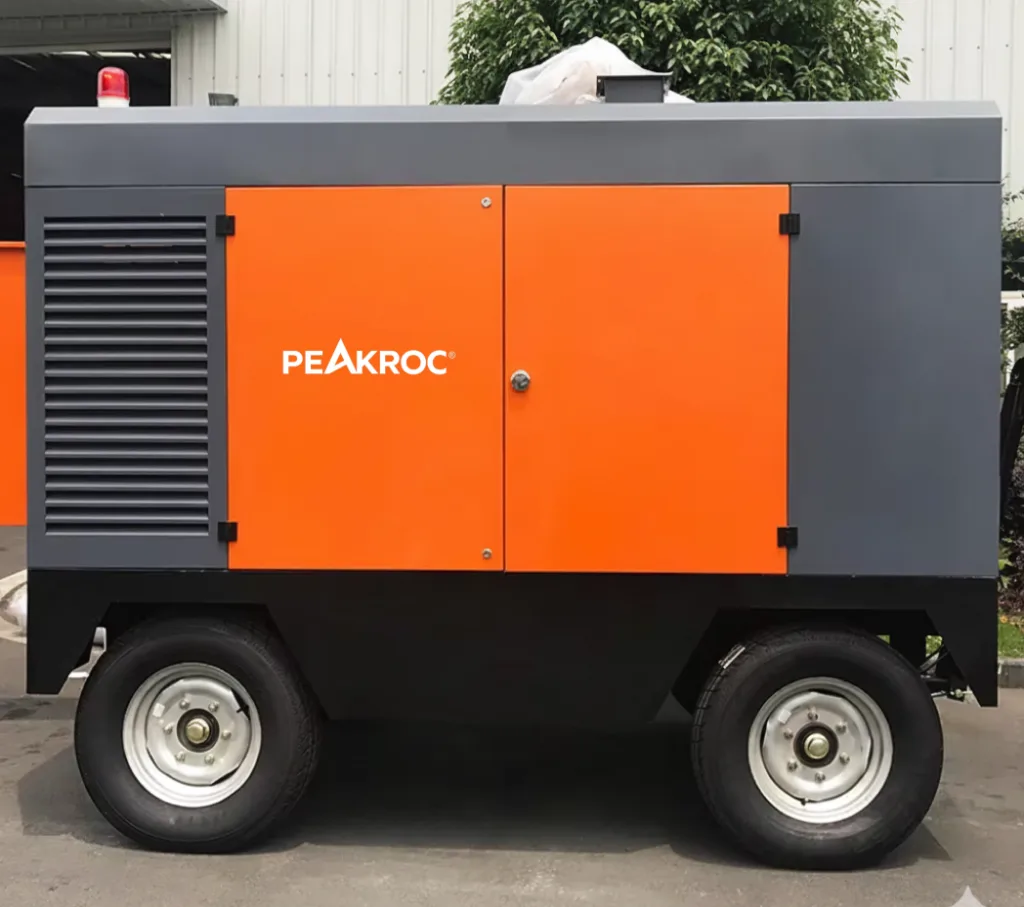
- Working pressure and airflow must be verified together. A compressor reaching its rated pressure does not necessarily deliver its specified FAD. For example, the Peakroc® 10 m³/min, 10 bar portable diesel compressor illustrates why both values need to be confirmed at the same operating point.
- Reliable FAD testing requires controlled conditions. Airflow, discharge pressure, inlet conditions, engine speed and measurement uncertainty must be recorded. Higher-capacity equipment, such as the Peakroc® 20 m³/min, 13 bar diesel compressor, requires suitable testing equipment.
- Fuel consumption, airend performance and safety controls deserve separate verification. For high-pressure compressors such as the Peakroc® 34 m³/min, 25 bar model, performance should be evaluated against the specific machine’s requirements. Our diesel compressor fuel consumption guide explains how operating conditions influence fuel use.
- FAT acceptance should be based on documented results. A complete report identifies the tested machine, instruments, operating conditions, measured performance, safety checks and any unresolved deviations. Customers should review these records before approving shipment.
Purchasing a portable diesel air compressor involves more than comparing engine power, working pressure, airflow and price. For overseas equipment buyers, one of the greatest risks is discovering after delivery that a compressor does not perform as specified.
A machine may start normally and reach its advertised pressure while delivering less air than expected. It may also have unstable load controls, abnormal temperatures, excessive fuel consumption or incorrectly configured safety systems. Resolving these issues after international shipment can create additional transportation costs, downtime and disagreements over responsibility.
A properly planned Factory Acceptance Test (FAT) reduces these risks by evaluating the actual equipment before dispatch. However, FAT should not be confused with a brief startup demonstration. The purpose is to establish, through appropriate measurements and documented procedures, whether the completed compressor meets the agreed purchase requirements.
What Is a Factory Acceptance Test for a Portable Diesel Air Compressor?
Factory Acceptance Testing is a structured inspection and verification process conducted at the manufacturing facility or another approved testing location before equipment is shipped.
For a portable diesel rotary screw compressor, an FAT may include the verification of FAD, working pressure, engine operation, lubrication, cooling, load/unload controls and protective devices. It also confirms that the installed components and accessories match the approved order.
The exact scope varies with equipment size, intended application and contractual requirements. A routine production test may establish that the machine starts, operates and responds correctly to basic controls, while a customer-witnessed FAT can include calibrated performance measurements, extended operation and detailed documentation.
FAT vs Site Acceptance Test (SAT)
The distinction between FAT and SAT is important, particularly for international projects.
FAT verifies the compressor under defined factory conditions before shipment. SAT takes place after delivery and examines whether the equipment operates correctly under the relevant site conditions.
For example, a compressor successfully tested near sea level may experience different engine and air-delivery performance at a mining project located 3,000 meters above sea level. High ambient temperature, fuel characteristics and connected air-system resistance can also affect field performance.
These conditions do not automatically invalidate the FAT. Instead, the buyer should confirm whether the equipment’s published ratings and environmental capabilities meet the intended application.
How to Prepare a Compressor FAT Before Testing
A credible FAT begins with an approved testing plan rather than an operator deciding which checks to perform on the day of inspection.
The purchase specification should clearly state the expected performance, installed configuration, applicable testing methods and acceptance criteria. Both parties should also agree on the documents required for verification and how unexpected results will be handled.
Five-Point Pre-FAT Planning Checklist
- Confirm the equipment specification: Verify compressor model, rated FAD, working pressure, diesel engine, airend, controller, chassis configuration and ordered options.
- Establish performance requirements: Define the intended pressure-flow operating point, applicable test method, operating conditions and contractual acceptance limits.
- Prepare calibrated instruments: Confirm that flowmeters, pressure gauges, temperature sensors and other relevant equipment are suitable for the test range and have appropriate calibration records.
- Define the operating procedure: Agree on stabilization requirements, test duration, loading conditions, measurements, safety arrangements and witness responsibilities.
- Confirm documentation and approval: Establish which records, photographs, certificates and signatures must be provided before shipment authorization.
This preparation prevents disputes caused by undefined testing conditions or changing acceptance criteria after measurements have been completed.
For instance, if a compressor is sold as delivering 20 m³/min at 13 bar, the contract should specify the meaning of that airflow rating and the conditions under which it is guaranteed. The supplier should not demonstrate only that the machine reaches 13 bar with minimal airflow and treat the result as proof of full capacity.
How to Verify Compressor FAD and Working Pressure
Free Air Delivery (FAD) is one of the most important performance measurements in a portable compressor FAT. It describes the air delivered by the compressor relative to specified free-air reference conditions.
FAD differs from theoretical displacement, which is derived from the compressor’s geometry and operating speed. Internal leakage, pressure, temperature and other operating characteristics influence actual delivery.
A pressure gauge alone cannot establish FAD. A compressor may build its rated pressure at relatively low demand while being unable to maintain that pressure when delivering its specified airflow.
ISO 1217 and Airflow Measurement
ISO 1217 provides recognized methods for acceptance testing of displacement compressors, including volume flow rate and power requirements. The applicable test method and any simplified procedure should be identified in the purchase agreement.
During a performance test, the compressor is operated at the specified conditions while suitable instruments measure airflow, pressure and other required parameters. Measurements are recorded and corrected according to the agreed methodology before being compared with the guaranteed performance.
The test equipment must be appropriate for the compressor’s capacity. A high-pressure portable compressor delivering more than 1,000 CFM requires a suitable high-capacity measurement arrangement, not an improvised method intended for a small workshop compressor.
Five Measurements That Make FAD Results Credible
- Delivered airflow: Measured and reported using the agreed FAD reference conditions and test procedure.
- Discharge pressure: Recorded at the specified measurement location while the compressor delivers the required airflow.
- Inlet conditions: Atmospheric pressure, temperature, humidity and other variables needed for the selected correction method.
- Engine operating state: Loaded RPM, relevant temperature readings and controller settings during the measurement.
- Instrument traceability: Measuring-device identification, calibration status, measurement uncertainty and documented corrections.
Consider a hypothetical compressor with a guaranteed capacity of 20.0 m³/min at 13 bar. After the agreed corrections, the FAT records 18.8 m³/min at the required operating pressure.
The measured capacity shortfall is:
FAD Shortfall = (20.0 − 18.8) ÷ 20.0 × 100% = 6%
This example demonstrates how results can be evaluated; it is not an actual Peakroc test record.
A 6% deviation does not automatically mean the machine passes or fails. The decision depends on the applicable standard, contractual tolerance, measurement uncertainty and agreed acceptance procedure. There is no justification for applying an arbitrary ±5% allowance to every compressor.
The key requirement is consistency: rated capacity, test conditions and acceptance criteria must be defined before testing begins.
Diesel Engine, Fuel Consumption and Airend Verification
A portable diesel compressor is an integrated system in which engine performance and compressor performance are closely connected. The engine must supply sufficient mechanical power while maintaining suitable operating speed and temperature under the intended compressor load.
FAT should first establish that the installed engine matches the approved specification. The model, serial number, rated configuration and relevant emissions documentation should be checked against the purchase order. During operation, the engine should maintain stable speed and acceptable temperatures without abnormal alarms or excessive vibration.
How Fuel Consumption Should Be Tested
Diesel consumption is normally reported in liters per hour (L/h), but the figure has little comparative value unless the operating conditions are specified.
A reliable test should record fuel consumption together with working pressure, delivered FAD, engine speed and loading condition. Where fuel flow is measured directly, the arrangement must properly account for fuel supply and any return flow.
For example, two compressors may both be rated at approximately 700 CFM, but one operates at 7 bar while the other operates at 20 bar. Comparing their hourly fuel use without considering this difference would be misleading.
If fuel consumption is a contractual performance requirement, the customer should specify the test conditions and measurement method before the FAT. Full-load testing may be sufficient for one project, while another may require additional part-load or unloaded fuel-consumption data.
Airend, Lubrication and Cooling Checks
The airend is the central mechanical assembly of a rotary screw compressor. During normal factory acceptance, its condition is generally assessed through operation rather than complete disassembly.
Technicians should examine abnormal mechanical noise, vibration, discharge temperature, lubrication behavior and visible leakage. Where required, the inspection can also include assembly records and identification of major components.
The cooling system must maintain appropriate engine and compressor temperatures during sustained operation. However, a successful factory test in moderate weather does not automatically establish that the machine will meet its full performance specification at an extreme ambient temperature.
Where high-temperature or high-altitude operation is important to the buyer, the supplier should provide suitable environmental performance or derating information in addition to the standard FAT records.
Safety Systems and Controller Function Testing
Even when a compressor meets its airflow and pressure targets, it should not be accepted if required protective systems fail to operate correctly.
The purpose of functional testing is to confirm that the machine responds to operating commands and abnormal conditions according to its approved design. The tests should be conducted by qualified personnel using safe, manufacturer-approved procedures.
Five Critical FAT Safety and Control Checks
- Emergency stop: Verify that activation produces the intended safe operating condition and that restart behavior follows the approved control logic.
- Pressure protection: Check pressure-related protective devices, setpoints, identification and supporting test or certification records.
- Temperature protection: Confirm that relevant temperature warnings and protective shutdowns function through approved testing or simulation.
- Load/unload control: Verify pressure regulation, engine-speed response, sensor indications and normal operating transitions.
- Mechanical integrity: Inspect accessible hoses, fittings, guards, mountings and air, oil, fuel and coolant connections for visible defects or leakage.
The testing method matters as much as the result. For example, a safety valve should be verified through an approved procedure rather than by creating uncontrolled overpressure in an assembled compressor.
Similarly, simulated alarms must use authorized service procedures to avoid bypassing protective functions or damaging components.
Portable Diesel Compressor FAT Diagnostic and Acceptance Table
The following table summarizes common findings and the appropriate verification approach.
| FAT Finding | Possible Explanation | Required Verification | Acceptance Action |
|---|---|---|---|
| FAD below specification | Measurement error, inlet restriction, speed or compression issue | Verify conditions, instruments and full-load performance | Correct and retest against agreed criteria |
| Rated pressure reached, but FAD unknown | Pressure demonstrated without capacity testing | Measure flow at the specified working pressure | Do not accept pressure alone as proof of FAD |
| Unstable pressure under load | Control settings, valve, sensor or engine-speed issue | Review pressure and loading trends | Resolve and repeat functional test |
| Fuel consumption above agreed value | Operating-point mismatch, engine or measurement issue | Verify load, airflow and fuel measurement | Compare with contractual fuel requirements |
| Abnormal temperature or vibration | Cooling, lubrication or mechanical problem | Inspect relevant systems and approved limits | Investigate before acceptance |
| Protective function fails | Sensor, wiring, controller or safety-device problem | Perform approved verification after correction | Close critical defects before release |
| Missing test or identification records | Documentation or traceability gap | Reconcile machine and test records | Complete required evidence before sign-off |
The table is a diagnostic aid rather than a universal pass/fail specification. The approved equipment documentation and contract determine which measurements and outcomes are acceptable.
How Long Should a Factory Acceptance Test Run?
There is no universal FAT duration for every portable diesel compressor. A routine production inspection may use a relatively short operating sequence, while a customer-specific FAT may require extended full-load testing or repeated loading cycles.
The important consideration is whether the test is long enough to obtain stable, representative measurements under the agreed procedure. A short startup demonstration cannot establish continuous full-load performance, and a brief fuel-consumption reading may be unrepresentative if the engine has not reached the relevant operating condition.
A suitable procedure should define stabilization requirements, measurement intervals and the operating states to be tested. If the customer needs evidence of long-duration reliability, that requirement should be specified separately rather than assumed to be part of a standard FAT.
Remote FAT and Third-Party Inspection
International buyers may choose remote FAT witnessing when visiting the factory is impractical. Live video can help verify machine identity, monitor the test process and review operating data without requiring the customer to travel.
However, remote witnessing should be supported by traceable measurements. A video showing the compressor running and a pressure gauge displaying its rated value does not independently demonstrate delivered FAD or fuel efficiency.
The buyer should be able to connect the test results to the machine’s serial number and review the measurement method, calibration records, corrected data and any deviations. Where a third-party inspection company is involved, its agreed scope should establish whether it is witnessing procedures, verifying documents or independently performing measurements.
Remote FAT can provide useful commercial assurance, but its credibility comes from the underlying evidence rather than video presentation alone.
Technical Field References
Published industry examples help illustrate how FAT, independent performance testing and field validation address different aspects of compressor quality.
The following references are based on external public information. They are not Peakroc® factory test records.
Field Reference 1: Witnessed Compressor Skid FAT for an Offshore Project, China
In August 2026, an industrial compressor manufacturer reported the completion of factory acceptance testing for a compressed-air skid intended for an offshore oil and gas project.
According to the manufacturer’s published account, customer representatives and classification-related inspectors reviewed equipment performance, structural assembly and electrical control systems before delivery.
This project illustrates how an FAT can involve several disciplines rather than a single compressor startup. Performance measurement, equipment identification, instrumentation and safety-related documentation may all form part of the acceptance process.
Engineering lesson: A credible FAT should verify the complete supplied package against the approved project requirements.
The equipment was an offshore compressor skid, not a towable diesel compressor. The report also does not provide a complete independently reproducible FAD dataset, so it should not be treated as a performance benchmark for portable equipment.
Field Reference 2: Portable Compressor Field Validation at 4,500 Meters
A manufacturer documented testing of three portable compressor models in China’s Kunlun Mountains during 2019.
The machines were evaluated at approximately 4,500 meters above sea level under extreme cold and changing weather conditions. The reported procedures included starting, loading, unloading and operation at different working conditions.
According to the published account, the tested machines met their predefined program objectives before undergoing further analysis and endurance testing.
Engineering lesson: Environmental qualification and factory acceptance are related but distinct activities. A compressor that passes FAT under controlled factory conditions may require separate evidence of suitability for extreme altitude or temperature.
This case concerns field validation of new compressor models rather than customer-specific pre-shipment FAT.
Field Reference 3: Independent Compressor Performance Verification
An established compressed-air industry performance program uses standardized data sheets and independent testing to assess published compressor performance claims.
Its documented procedures include selecting representative equipment and testing it against applicable performance methods, with ISO 1217 forming part of the recognized testing framework.
Engineering lesson: Standardized measurement and independent verification make advertised compressor performance easier to compare.
However, this program focuses on selected participating equipment categories and models. It does not mean that every compressor sold has undergone an individual witnessed FAT, nor does it establish certification of Peakroc® products.
FAT Reports: What Should Buyers Receive Before Shipment?
The final FAT report connects the completed inspection to the exact compressor being delivered. Without machine identification, test conditions and supporting measurement records, a statement that the unit has “passed factory inspection” provides limited technical assurance.
Five Essential FAT Documentation Groups
- Equipment identification: Compressor, engine and relevant airend identification, nameplate photographs, ordered configuration and serial numbers.
- Performance records: FAD, discharge pressure, operating speed, temperatures, fuel data where required, test conditions and calculated results.
- Inspection and safety evidence: Functional checks, leakage inspection, required certificates and instrument calibration records.
- Nonconformity records: Deviations, corrective actions, retest results and any outstanding items approved by the customer.
- Final approval documents: Completed FAT report, authorized signatures, applicable manuals and agreed shipment-release documentation.
The report should clearly distinguish passed tests, failed tests and items that were not included in the agreed test scope.
Conditional acceptance may be permitted by contract for defined outstanding items, but unresolved critical safety defects should not be treated as ordinary paperwork exceptions.
For international shipments, photographs or videos of the actual machine can support identification and documentation. They cannot replace calibrated performance data where such testing is contractually required.
Final Recommendation
A portable diesel air compressor FAT should verify more than whether the engine starts and the machine reaches its advertised pressure.
For equipment buyers, the most important performance result is actual FAD at the agreed working pressure. Engine stability, fuel consumption, airend behavior, cooling performance and protective-system operation provide additional evidence that the machine is ready for delivery.
A reliable acceptance process begins with clearly defined specifications, uses suitable measurement methods and calibrated instruments, and records results against predetermined criteria. The final report should identify the tested compressor and document any corrective actions before shipment authorization.
For overseas customers, this approach reduces the risk of receiving equipment that does not meet contractual requirements while creating a clear technical record for both buyer and supplier.
The value of FAT is not simply proving that a compressor can run. It is demonstrating, within the agreed test scope, that the delivered machine performs as specified and is ready for authorized shipment.
FAQ
What is a factory acceptance test for a portable diesel air compressor?
A Factory Acceptance Test (FAT) is an agreed inspection and testing process conducted before shipment. It verifies that the compressor’s configuration, operating functions, performance and applicable safety systems meet the approved purchase requirements.
How do you verify the actual CFM or FAD of a portable compressor?
Use a suitable calibrated airflow measurement system and an agreed test method. Measure delivered airflow at the specified working pressure while recording inlet conditions, engine speed and other required parameters. Apply the relevant corrections before comparing the result with the rated FAD.
Does reaching rated pressure mean a compressor passes FAT?
No. A compressor may reach rated pressure under low airflow demand while failing to deliver its specified capacity. Pressure and FAD must be evaluated together at the agreed operating point.
Is ISO 1217 required for every portable compressor FAT?
Not necessarily. ISO 1217 provides recognized acceptance-test methods for displacement compressors, but the applicable test scope depends on the equipment, contract and requirements. Buyers should confirm the agreed method and supporting records before testing.
Should diesel fuel consumption be measured during FAT?
Fuel consumption should be measured when it is part of the agreed acceptance requirements. Results should identify the operating pressure, delivered airflow, engine load, measurement method and test conditions so the values can be interpreted correctly.
Can an airend be checked without disassembling it?
Yes, some operational aspects can be assessed through noise, vibration, temperature, lubrication and performance measurements. However, these checks cannot guarantee the absence of every internal defect. Internal dimensional verification requires appropriate inspection records or specialist procedures.
Can international buyers witness a compressor FAT remotely?
Yes. Remote witnessing can include live machine identification, observation of tests, operating data and document review. It should be supported by traceable test results, calibration records and agreed acceptance criteria rather than video alone.
What documents should be included in a portable compressor FAT report?
A useful FAT package includes machine identification, approved specifications, test methods, operating conditions, measured results, calibration information, safety and inspection records, nonconformities, retest results where applicable and final approval signatures.
Author

Mark Chen – Senior Mechanical Engineer, Peakroc®
Mark Chen is a senior mechanical engineer at Peakroc®, specializing in compressed air systems and drilling equipment for mining and construction applications. With over 15 years of field experience, he has led multiple projects on optimizing air delivery efficiency, equipment durability, and energy consumption.