
Key Takeaways
- Fleet monitoring turns equipment data into maintenance and operating decisions. Engine hours, loaded time, fuel use, location and alarms help contractors understand how portable diesel compressors are being used across different jobsites. The Peakroc® diesel compressor fuel consumption guide explains how operating conditions affect fuel costs.
- Engine hours alone do not measure productive compressor operation. A machine may run for many hours while delivering relatively little useful compressed air. The Peakroc® used vs new portable compressor guide explains why accumulated hours should be considered alongside operating history and maintenance records.
- Remote monitoring can improve maintenance planning and equipment visibility. Telematics may provide GPS location, engine speed, operating pressure, temperature and fault-code information when compatible hardware and sensors are installed. A high-flow machine such as the Peakroc® 20 m³/min, 13 bar portable diesel compressor represents the type of field equipment that may benefit from fleet-level monitoring, subject to confirmed controller compatibility.
- Telematics does not replace mechanical diagnosis or proper compressor selection. Fault alerts indicate conditions requiring investigation rather than proving which component has failed. The Peakroc® diesel compressor engine power-loss guide covers related diagnostic principles. Buyers can also use the compressor selection service to review equipment requirements before considering monitoring options.
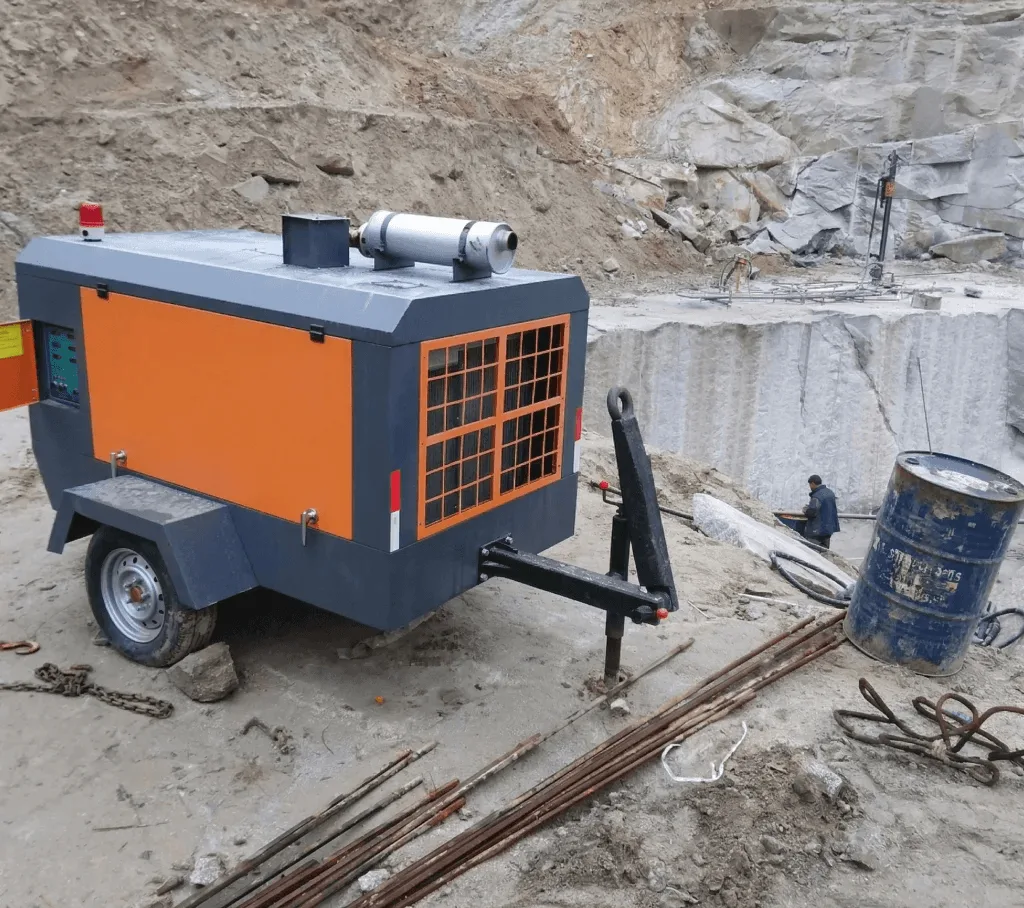
A portable diesel screw air compressor may spend its working life moving between construction sites, quarries, mines and industrial projects. For a company managing several machines, knowing where each compressor is located is only the beginning.
Fleet managers also need to understand whether the equipment is working productively, how much diesel it consumes, when maintenance is due and whether an emerging fault could interrupt operations.
Traditionally, much of this information came from manual hour-meter readings, maintenance sheets and reports from operators. Telematics adds the ability to collect selected machine data electronically and make it available to authorized personnel through a dashboard or management platform.
However, not every portable compressor provides the same data. A basic GPS tracker may only report location, while a more advanced installation can read engine and compressor-controller information.
Effective fleet monitoring depends on collecting reliable data and using it to make practical decisions—not simply installing a GPS device on every machine.
What Is Portable Diesel Compressor Telematics?
Telematics combines equipment monitoring, location tracking and data communication.
A typical system uses an onboard device to collect information from a GPS receiver, engine electronic control unit, compressor controller or additional sensors. The information is transmitted through a cellular or satellite network to a platform where fleet managers can review machine status.
Depending on the installation, the system may display engine running hours, loaded hours, fuel consumption, operating temperatures, compressor pressure and diagnostic alarms.
Some platforms also provide maintenance reminders, geofencing and reports across multiple machines.
Why Small Compressor Fleets May Benefit
Remote monitoring is often associated with large rental businesses, but smaller fleets can also benefit when compressors operate at distant jobsites.
For a contractor managing five portable compressors, an unexpected shutdown at a remote project may require a long service trip. Knowing the fault category, engine hours and current machine location before dispatching a technician can improve preparation.
Rental companies face an additional challenge: a compressor may remain at a customer’s site after productive work has finished. Location and usage records can help determine whether equipment should be collected or reassigned.
The value of telematics therefore depends more on fleet distribution, equipment utilization and maintenance costs than on fleet size alone.
Engine Hours vs Loaded Hours vs Idle Time
Engine hours are one of the easiest measurements to obtain. Most portable diesel compressors have a mechanical or electronic hour meter, but total running time does not show how effectively the machine has been used.
A compressor can be running while fully loaded, partially loaded or unloaded. Some equipment also reduces engine speed during unloaded operation.
These operating states must be distinguished when evaluating utilization.
Engine running hours represent the time the diesel engine operates.
Loaded hours generally represent the time the compressor controller identifies the machine as loaded and delivering air, although the precise definition varies by manufacturer.
Idle time may refer to engine operation at idle speed, while unloaded time describes compressor operation without normal loaded air delivery. They are not necessarily identical.
A compressor can also spend time at partial load. Therefore, loaded-hour data alone cannot establish the total volume of compressed air delivered.
Calculating Loaded Time Ratio
Consider an illustrative compressor operating during one week:
Engine running hours: 60 hours
Loaded hours: 42 hours
Non-loaded running hours: 18 hours
The loaded-time ratio is:
Loaded Time Ratio = Loaded Hours / Engine Running Hours × 100
42 / 60 × 100 = 70%
This indicates that 70% of recorded engine running time was classified as loaded operation.
The remaining 30% requires further investigation. Some unloaded running may be necessary for compressor control, equipment cooldown or intermittent air demand.
It would be incorrect to classify all 18 hours as waste automatically.
Five Utilization Metrics Worth Tracking
- Total engine hours: Used for maintenance scheduling and operating-history records.
- Loaded operating hours: Helps distinguish productive air-delivery periods from other running states.
- Unloaded or idle hours: Highlights operating patterns worth reviewing for unnecessary fuel consumption.
- Calendar utilization: Compares the time equipment is assigned or working with its available scheduling period.
- Operating trends: Identifies machines that run unusually long, sit unused or experience repeated load cycling.
These indicators should be defined consistently across the fleet. Different controller manufacturers may calculate loaded hours and idle periods differently.
Monitoring Fuel Consumption and Operating Costs
Diesel fuel is a major operating expense for portable compressors, particularly in high-pressure and high-flow applications.
Telematics may provide fuel rate, estimated consumption or fuel-tank level, depending on the available sensors and engine data.
These measurements are not automatically equivalent.
An ECU-derived fuel-consumption estimate may differ from actual refueling quantities. A tank-level sensor can also be affected by tank geometry, movement and measurement resolution.
For meaningful cost analysis, fleet managers should reconcile electronic readings with fuel purchases and operating records.
Example: Identifying Avoidable Unloaded Operation
Suppose the previously described compressor operates for 60 hours per week, including 18 unloaded hours.
For illustration, assume it consumes 7 L/h during unloaded operation.
If the contractor identifies five hours of genuinely unnecessary running that can be eliminated safely, the potential fuel saving is:
5 hours × 7 L/h = 35 liters per week
At an assumed diesel price of $1.20/L:
35 × $1.20 = $42 per week
These are hypothetical values, not measured fuel-consumption data for a particular compressor.
Actual savings depend on engine configuration, operating pressure, control strategy, duty cycle and whether stopping the compressor is permitted.
The important benefit of monitoring is that managers can identify specific operating patterns and calculate potential improvements using actual machine data.
Five Fuel-Management Checks
- Compare recorded fuel consumption with refueling and inventory records.
- Review unloaded operation during breaks and low-demand periods.
- Investigate machines using unusually high fuel at comparable pressure and output.
- Check whether compressor size matches the actual application demand.
- Compare liters consumed with productive output, not only engine running hours.
For drilling, productive output may be measured in meters completed. For surface preparation, it may be square meters cleaned. These measures can provide more useful efficiency information than fuel consumption per hour alone.
GPS Tracking, Geofencing and Rental Fleet Control
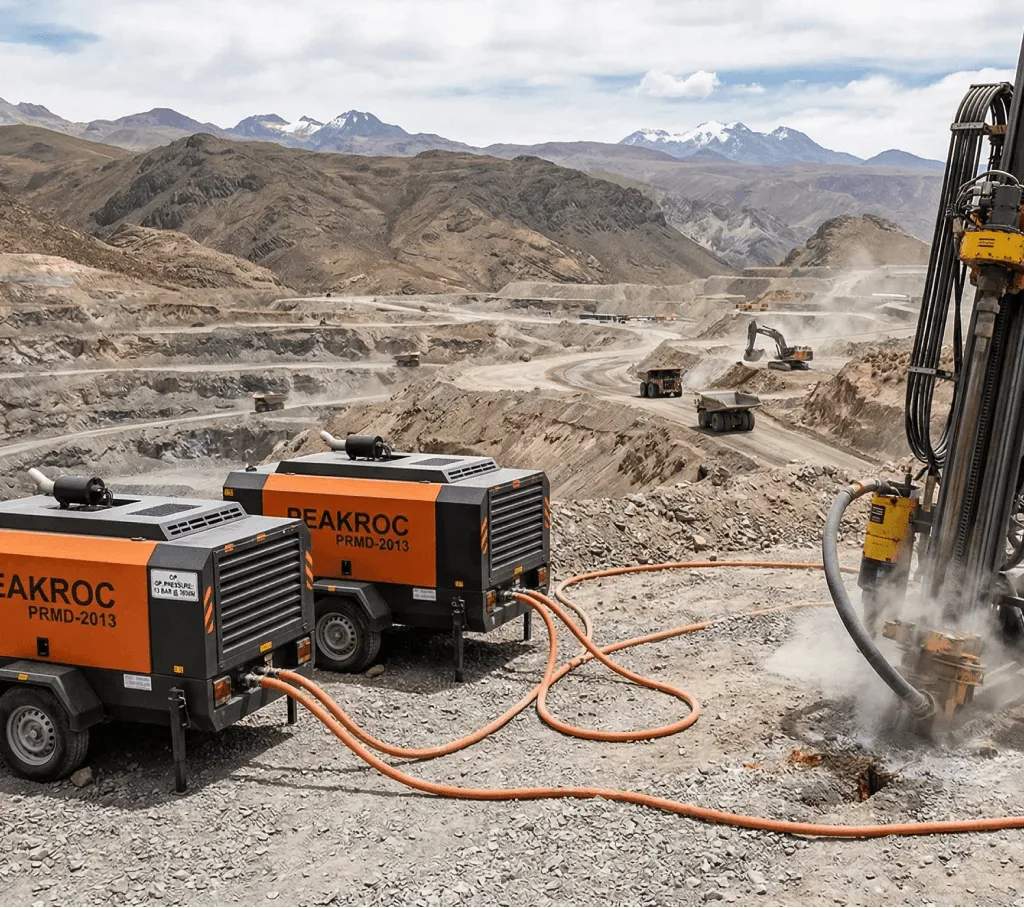
Portable compressors are valuable mobile assets that may be transported between jobsites frequently.
GPS tracking helps fleet managers confirm the reported location of a machine and plan equipment collection, service visits or transfers.
Geofencing allows a virtual boundary to be established around an approved operating area. When supported by the monitoring platform, moving outside that boundary may trigger an alert.
These functions can be useful for rental companies and contractors operating across multiple remote sites.
However, GPS location is not proof that a compressor is operating productively. A machine may remain at the correct location for several days without being started.
Likewise, a location alert does not establish that theft has occurred. Authorized transportation, inaccurate location measurements or delayed updates may explain unexpected movement.
GPS monitoring should support equipment control procedures rather than replace them.
Five GPS and Asset-Tracking Checks
- Verify the location and assigned jobsite of each compressor.
- Identify unauthorized or unexplained movement outside approved areas.
- Review machines that remain unused at completed projects.
- Coordinate service visits using current equipment location.
- Confirm GPS update intervals, connectivity coverage and alert accuracy.
Remote jobsites can have poor cellular reception. A telematics device may temporarily store information and transmit it when connectivity returns, depending on its design.
Therefore, a dashboard’s most recent location should always be considered together with its timestamp.
Fault Codes, Engine Health and Remote Diagnostics
Remote monitoring becomes especially valuable when it provides information about operating abnormalities before a complete shutdown occurs.
Depending on the controller and sensors, a system may record high coolant temperature, low oil pressure, abnormal compressor discharge temperature, battery problems or other diagnostic events.
Some electronically controlled diesel engines also provide fault codes related to fuel delivery, engine control and emissions systems.
These codes require interpretation using the correct engine documentation.
A fault-code notification does not automatically identify a failed component. For example, a high-temperature alarm may result from a blocked cooler, insufficient ventilation, a coolant problem or an abnormal operating condition.
The purpose of remote diagnostics is to support a faster and more informed response.
Five Fault-Monitoring Actions
- Record the event: Save the fault code, timestamp, engine hours and operating conditions.
- Prioritize critical warnings: Distinguish immediate shutdown conditions from maintenance reminders.
- Review trends: Compare temperature, pressure and repeated alerts before and after the event.
- Prepare field service: Use available information to determine likely tools, parts and inspection procedures.
- Verify the repair: Confirm that the fault has been addressed and that the machine operates within approved limits.
Safety-critical engine and compressor protection functions must remain active. Remote monitoring should never be used to bypass automatic shutdown systems or justify continued operation during dangerous conditions.
Fleet Monitoring Troubleshooting Table
| Dashboard Observation | Possible Explanation | Recommended Action |
|---|---|---|
| High engine hours, low loaded hours | Excessive unloaded running or intermittent demand | Review operating schedule and load records |
| Fuel use rises without more productive work | Leakage, changed duty, maintenance issue or low utilization | Compare fuel records, pressure and equipment condition |
| Compressor stops sending location updates | Weak signal, power issue or disconnected device | Check last timestamp and connectivity |
| Repeated temperature warnings | Cooling restriction, overload or sensor issue | Review temperature history and perform approved inspection |
| Unexpected GPS movement | Authorized transport, positioning error or unauthorized movement | Verify jobsite assignment and contact responsible personnel |
| Loaded hours remain zero despite compressor use | Missing controller integration or incorrect data mapping | Validate load-status signals and device configuration |
| Frequent fault-code alerts | Recurring fault, unresolved repair or incorrect alarm threshold | Review codes and service history |
Dashboard observations should guide investigation, not substitute for physical inspection or manufacturer-approved service procedures.
What Hardware Does a Portable Compressor Need?
Not every compressor can transmit engine and compressor data through a simple plug-in GPS tracker.
The available information depends on the engine ECU, compressor controller, sensors and communication interfaces.
A basic asset tracker may provide GPS location and movement alerts without reading compressor operating states.
A more advanced telematics device may connect to a compatible controller through CAN-based or another supported interface and retrieve hours, pressure, temperature and diagnostic information.
Older mechanically controlled diesel compressors may require additional sensors or counters to obtain useful operating-state data.
Five Questions Before Installing Telematics
- What data already exists? Check engine and compressor-controller capabilities before buying hardware.
- Is the interface compatible? Confirm the supported protocol, wiring and available data fields.
- What connectivity is available? Evaluate cellular or satellite coverage at the intended jobsites.
- Who owns the data? Clarify access permissions, retention periods, export formats and service subscriptions.
- Can the system be maintained? Verify installation quality, firmware support, device replacement and troubleshooting procedures.
Some mixed-fleet platforms support standardized data exchange through APIs. ISO/TS 15143-3:2020 describes a server-to-application telematics data exchange framework for specified mobile construction machinery.
However, it does not guarantee that every portable compressor can provide all listed data fields. Compatibility must be verified for the actual equipment and monitoring system.
Technical Field References
The following published cases illustrate how equipment location, utilization monitoring and fault alerts can support fleet management.
They are external references, not Peakroc® customer projects. Only the first case directly concerns a fleet containing portable air compressors.
Field Reference 1: GPS Recovery of a Portable Compressor in West Texas
A 2019 equipment-rental case from the Permian Basin described portable air compressors and generators supplied to a remote energy-service contractor.
The rental equipment was fitted with GPS tracking devices.
When one compressor was reported stolen, the customer used the tracking platform to identify its location. According to the published account, the machine was located and recovered with assistance from the authorities.
Engineering lesson: Location monitoring can protect mobile compressor assets and support recovery when equipment disappears from remote jobsites.
This was a supplier-published customer case, not an independently audited fleet study. It did not provide a quantified reduction in annual theft losses.
Field Reference 2: Construction Fleet Reduces Excessive Idling
A 2018 construction-equipment report described a Virginia contractor using equipment telematics to investigate excessive engine idling.
The company found that some machines were left running throughout the workday even when productive work was not taking place.
After reviewing the data and changing operating practices, the contractor reported reducing idling by approximately 70% and estimated fuel savings of $5,000–$10,000 over four months.
Engineering lesson: Operating-hour data becomes financially useful when managers identify avoidable behavior and implement appropriate changes.
The reported figures came from a broader construction-equipment fleet, not portable compressors. They must not be presented as achievable savings for a typical diesel compressor.
Field Reference 3: Remote Engine Temperature Alerts in Equipment Operations
A published equipment-management case described a waste-services operator using telematics on loaders at transfer facilities.
Debris accumulation had previously contributed to engine overheating problems.
The company introduced monitoring focused on working hours, idling, temperature and air-cleaner restriction. Managers could then respond to overheating alerts and contact the operating facility promptly.
Engineering lesson: Remote fault information can improve maintenance response when equipment operates away from the central maintenance team.
The case demonstrated an operational monitoring process, but did not provide an independently verified percentage reduction in breakdowns.
Is Telematics Worthwhile for a Small Compressor Fleet?
Telematics introduces costs for hardware, installation, connectivity, software and ongoing administration.
The investment should therefore be evaluated against the problems it is expected to solve.
For a small fleet operating at one supervised location, manual monitoring may remain adequate.
A similar-sized fleet spread across several distant projects may benefit considerably more from location visibility, operating-hour records and fault notifications.
The value also depends on management action. Collecting thousands of data points does not reduce fuel use if nobody reviews unloaded operation or changes equipment scheduling.
A useful return-on-investment calculation compares annual monitoring costs with documented reductions in avoidable fuel consumption, travel, downtime and equipment loss.
Potential resale benefits may also exist where maintenance and operating records improve buyer confidence, but higher resale value should not be assumed without supporting market evidence.
Five-Part Portable Compressor Telematics RFQ Checklist
Before selecting a telematics solution, request:
- Machine specifications: Compressor model, engine model, controller type, serial number and electrical system.
- Required measurements: Engine hours, loaded hours, fuel rate, fuel level, GPS location, pressure, temperature and fault codes.
- Integration requirements: Available interfaces, supported signals, additional sensors and installation limitations.
- Platform services: Connectivity coverage, reporting frequency, alerts, user access, data export and retention.
- Commercial details: Hardware price, installation, subscription fees, support, warranty and data ownership.
For equipment buyers, these details should be verified before assuming that a compressor advertised as having an electronic control panel also supports cloud-based remote monitoring.
Likewise, compatibility with one engine family does not establish compatibility with every engine configuration.
Final Recommendation
Portable diesel air compressor fleet monitoring is most useful when it connects equipment data with practical management decisions.
Engine hours support maintenance scheduling, while loaded and unloaded hours provide a clearer view of operating patterns. Fuel records help identify cost trends, GPS improves asset visibility, and fault alerts support maintenance preparation.
However, accurate interpretation depends on consistent definitions, suitable sensors and verified controller compatibility.
The goal of compressor telematics is not to collect more data. It is to improve equipment availability, reduce avoidable operating costs and help fleet managers make better decisions using trustworthy information.
FAQ
What is portable diesel air compressor telematics?
It is the electronic collection and transmission of compressor operating, location or diagnostic data to a remote monitoring platform. Available features depend on installed hardware, sensors and controller compatibility.
What is the difference between engine hours and loaded hours?
Engine hours record diesel-engine running time. Loaded hours record periods identified by the compressor controller as loaded operation. They are not equivalent to total productive output or delivered air volume.
How do I calculate compressor loaded-time ratio?
Divide loaded hours by engine running hours and multiply by 100. For example, 42 loaded hours out of 60 engine hours gives a 70% loaded-time ratio.
Can telematics reduce diesel compressor fuel consumption?
It can help identify unnecessary running, inefficient utilization and unusual fuel-consumption trends. Actual savings depend on equipment duty, operating changes and verified fuel data.
Can GPS tracking prevent portable compressor theft?
GPS can support location alerts, asset tracking and recovery, but it cannot guarantee theft prevention. Device connectivity, power supply, accuracy and response procedures affect its usefulness.
Can telematics diagnose diesel compressor faults remotely?
It can provide warnings, fault codes and operating trends when supported by the equipment. However, these signals do not necessarily identify the failed component and may require onsite inspection.
Can older diesel compressors be fitted with telematics?
Many can receive basic GPS tracking. Advanced monitoring may require compatible electronic controllers or additional sensors. Retrofit feasibility must be assessed for the specific machine.
Is fleet monitoring worthwhile for only five compressors?
It can be, especially when the machines work at dispersed or remote sites. The decision should compare monitoring costs with expected benefits from improved utilization, maintenance response and asset control.
Author

Mark Chen – Senior Mechanical Engineer, Peakroc®
Mark Chen is a senior mechanical engineer at Peakroc®, specializing in compressed air systems and drilling equipment for mining and construction applications. With over 15 years of field experience, he has led multiple projects on optimizing air delivery efficiency, equipment durability, and energy consumption.