
Key Takeaways
- Mounting configuration does not determine compressor performance. Required FAD/CFM and working pressure still come first. Mounting determines how the compressor moves, integrates with other equipment and is maintained.
- Rig-mounted compressors are best suited to dedicated drilling packages where the rig and compressor normally work and move together. Peakroc integrated DTH rigs demonstrate this all-in-one approach for quarrying and production drilling.
- Trailer-mounted compressors provide the greatest fleet flexibility when one compressor needs to serve different rigs or projects. See the Peakroc Trailer-Mounted Diesel Air Compressor Guide.
- Skid-mounted compressors are useful for semi-fixed projects, truck-bed installations, underground mines and custom support packages. The Peakroc Off-Road Diesel Air Compressor Guide explains how chassis configuration changes with site logistics.
- For large high-flow compressors, mounting decisions should also consider wet weight, lifting points, ground clearance and service access. See the 1100–1200 CFM High-Flow Portable Compressor Guide.
- Peakroc high-pressure compressors can also be configured for integrated installations. The 39 m³/min, 25 bar PRMD Series is available in trailer, skid or truck-mounted directions depending on project requirements.
When selecting a portable air compressor, buyers normally begin with airflow and pressure. That is correct: if the compressor cannot deliver the required FAD at the required pressure, the chassis underneath it does not matter.
Once the air requirement is correct, however, the mounting configuration can significantly affect daily productivity. The same high-pressure compressor may be integrated directly into a drilling rig, installed on a towable trailer or placed on a structural skid. All three arrangements can deliver compressed air, but they create very different transport, maintenance and fleet-management systems.
A useful decision sequence is:
FAD & Pressure → Application → Movement Frequency → Rig Integration → Transport → Site Access → Serviceability → Total Cost
What Rig-Mounted, Trailer-Mounted and Skid-Mounted Actually Mean
A rig-mounted compressor is integrated directly into the drilling rig, carrier or dedicated drilling platform. The drilling equipment and compressor therefore operate as one package. Modern integrated DTH rigs can combine the drill, screw compressor, hydraulic system and sometimes dust collection on a single crawler chassis. Peakroc’s current integrated DTH range, for example, includes configurations around 21 m³/min and 24 bar for 5- and 6-inch DTH hammer applications.
The main advantage is operational simplicity. The compressor arrives at the hole with the rig, moves to the next hole with the rig and normally uses a short air path between the compressor and rotary head. There is no separate trailer that needs to be positioned beside every drilling location.
A trailer-mounted compressor remains an independent machine. Its compressor package is installed on an axle, wheels and tow bar so it can be transported separately from the drilling rig or pneumatic equipment. This arrangement is common in water-well drilling, construction, quarry work, pipeline projects and rental fleets because the compressor can be reassigned from one job to another without changing the machine it supplies.
A skid-mounted compressor uses a structural base rather than a road-towable chassis. It can be loaded onto a truck, integrated into a drill or support vehicle, installed on an industrial platform or moved by crane or forklift. Skid mounting is especially useful when road towing is unnecessary and the compressor will operate in one area for a longer period.
The difference is therefore not simply “with wheels or without wheels.” It is a question of how the compressor fits into the operating system around it.
Mobility and Rig Integration Usually Make the First Decision
Rig mounting offers the highest level of integration. If a drilling contractor always uses the same air demand, hammer range and drilling rig together, keeping the compressor onboard can reduce daily setup. The operator moves one machine instead of positioning a drill rig and a separate compressor at every hole.
This is particularly attractive in quarry and open-pit production drilling, where rigs may advance repeatedly across a bench. A shorter compressor-to-rig air path can also reduce hose length and simplify high-pressure air delivery.
The disadvantage is that the compressor becomes part of the drilling machine. If future work requires significantly more airflow or a higher pressure class, upgrading may be more complicated than replacing a standalone compressor. Maintenance planning is also linked more closely to the rig because major compressor service can affect availability of the complete drilling package.
Trailer mounting takes the opposite approach. The compressor remains an independent fleet asset, making it easier to use different compressors with different rigs. A contractor can assign a 13-bar machine to one project, move a 25-bar unit to another drilling crew and keep a third machine available as backup.
This flexibility is particularly valuable when a company handles different hole diameters, depths or drilling methods instead of repeating one standard job throughout the year.
Skid mounting sits between these two approaches. It allows a compressor to be integrated onto a truck or rig platform without permanently making it part of that machine. The skid can later be lifted onto another transport system if project requirements change.
Transport and Jobsite Access Matter as Much as Mobility
A trailer is usually the simplest solution when the compressor regularly travels by road between independent jobsites. The operator can tow the compressor behind an approved vehicle and disconnect it after arrival. For construction, rental, pipeline and mobile drilling contractors, that independence is often worth the additional trailer hardware.
Mining and quarry operations can be different. The compressor may stay inside the same mine for months and only move occasionally between benches. In that case, highway towing capability has much less value. A skid can remove trailer components such as axles, wheel bearings, brakes and road-lighting hardware while creating a more compact package for mine transport.
Rig-mounted systems can reduce the number of separate machines that must reach difficult drilling pads. This can be valuable on narrow quarry benches, steep access roads or confined drilling areas. The tradeoff is that integrating a large compressor increases the total weight and physical size of the drilling machine.
A 30–40 m³/min high-pressure compressor is already a substantial piece of equipment before it is integrated with a rig. Adding it to the carrier affects axle or track loading, center of gravity, transport width, cooling airflow and available service space. For this reason, larger machines require more careful integration than compact compressors.
A practical comparison looks like this:
| Factor | Rig-Mounted | Trailer-Mounted | Skid-Mounted |
|---|---|---|---|
| Hole-to-hole mobility | Excellent | Good | Depends on carrier |
| Independent fleet use | Low | Excellent | Good |
| Road transport | Moves with rig | Excellent | Requires truck/platform |
| Site footprint | Compact as one package | Requires separate position | Usually compact |
| Rig integration | Highest | Lowest | Medium to high |
| Compressor swapping | Difficult | Easy | Moderate |
| Semi-fixed use | Possible | Possible | Excellent |
| Custom installation | High | Limited | Excellent |
Serviceability Should Be Designed Before the Mount Is Finalized
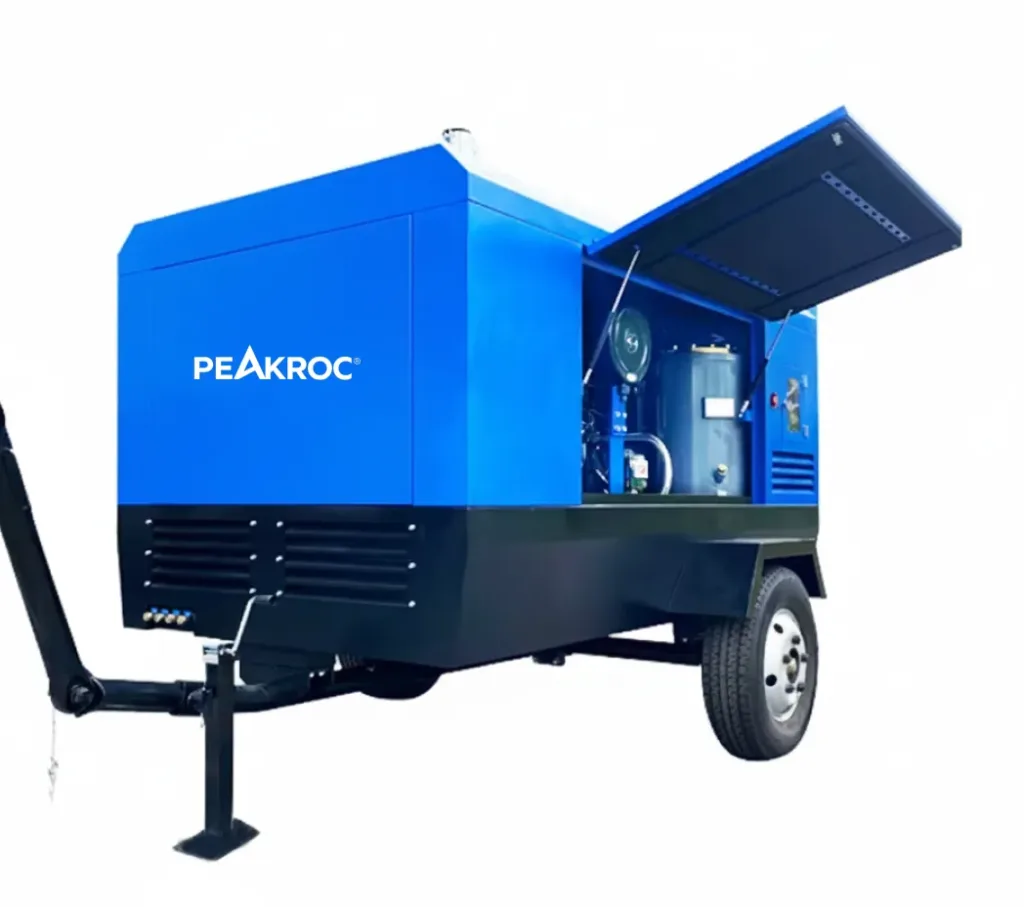
A compressor that fits perfectly on a drawing can become difficult to maintain once installed beside a drilling mast, fuel tank, truck cab or hydraulic system. Serviceability should therefore be considered before the final structural layout is approved.
An independent trailer compressor normally provides relatively predictable service access because the complete enclosure was designed around the compressor. Rig and skid installations require more planning because other equipment may occupy the space where technicians need to work.
Before approving an integrated or skid-mounted design, check:
- Service doors: They should open fully without hitting the mast, truck body, fuel tank or surrounding structure.
- Filters and separator elements: There should be enough clearance to remove them without dismantling unrelated equipment.
- Cooler access: Radiator and oil-cooler surfaces should remain accessible for cleaning in dusty drilling environments.
- Cooling airflow: Hot discharge air should not recirculate directly into the compressor intake.
- Oil and coolant service: Drain points and filling points should remain reachable after installation.
- Lifting points: Major components and the complete compressor package should remain serviceable with available lifting equipment.
- Control-panel visibility: Operators should be able to access emergency stops, gauges and diagnostic information safely.
Cooling deserves particular attention on skid and integrated installations. Compressors move large volumes of cooling air, and enclosing a machine tightly inside another structure can cause hot exhaust air to recirculate through the radiator. A compact installation is useful only if cooling performance and maintenance access remain adequate.
Field Example: Integrated Air Can Still Need Additional Capacity
A remote lithium exploration project in Western Australia provides a useful example of the difference between integrated and standalone air.
The drilling rigs used on the project already had onboard compressors and boosters. For normal drilling, that integrated system provided the air required by the rig. One deeper reverse-circulation drilling program, however, required more airflow than a single onboard compressor could supply.
The contractor therefore connected an additional standalone high-pressure compressor to the rig’s existing air system. The combined system delivered approximately 2,500 CFM at 30 bar before feeding a booster, allowing drilling samples to be collected at around 500 m depth.
The lesson is not that onboard air was the wrong choice. Integrated air remained useful for normal drilling. The standalone compressor provided capacity flexibility when the drilling requirement moved beyond the original onboard system.
This is one of the strongest reasons contractors with highly variable drilling programs may prefer keeping at least part of their compressor fleet independent.
Field Example: Why Skid Mounting Works Underground
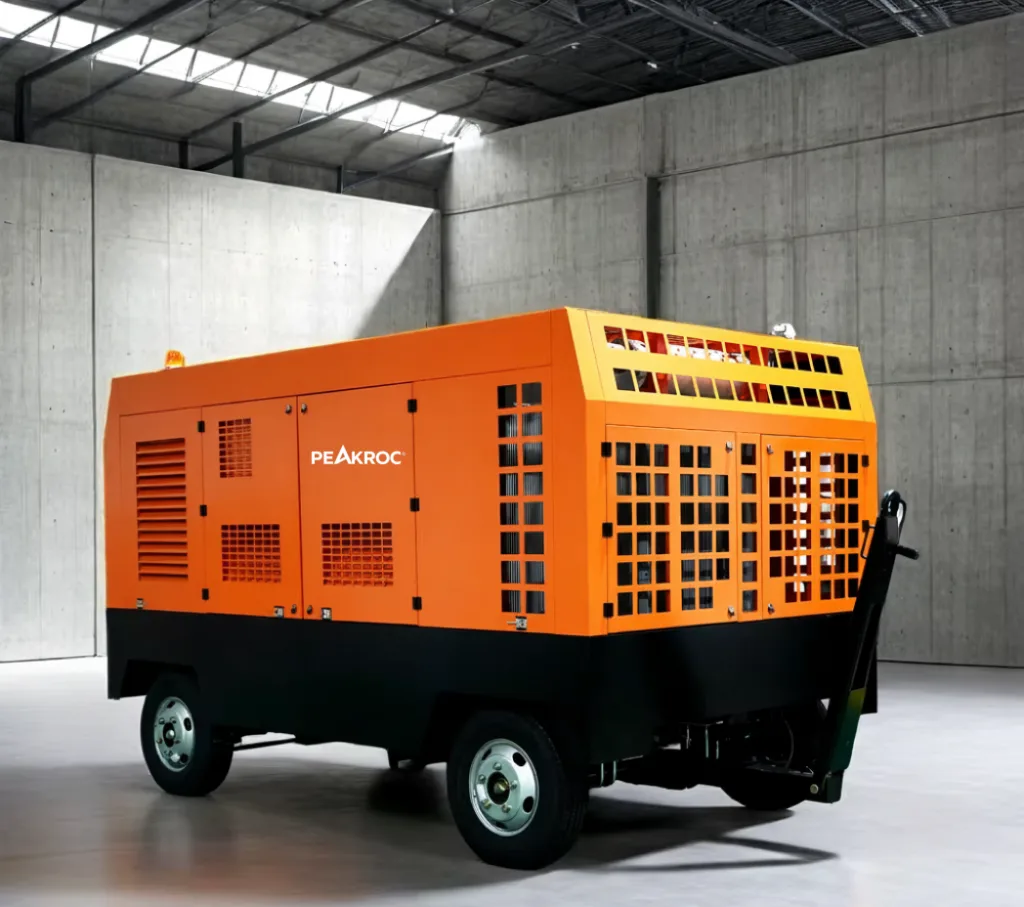
A different Australian mining project demonstrates the logic behind skid mounting. The mine required a high-capacity compressor for underground use, where road towing was not the main concern. The unit had to fit the underground environment, relocate within the mine and operate reliably in a confined installation.
The compressor was installed on a purpose-built 2,000-liter all-bolted skid designed for both lifting and dragging. Cooling airflow was also redesigned so hot discharge air would be removed from the installation rather than recirculating into the cooling intake.
This is a good example of what skid mounting is designed to achieve. The compressor did not need a road axle and tow bar. It needed a stable structural base that could be relocated with mine equipment while fitting the site’s electrical, cooling and access requirements.
The mounting method followed the jobsite rather than the other way around.
How Mounting Configuration Changes Total Cost
Comparing only the compressor purchase price can hide much of the real cost difference between mounting types.
Trailer mounting adds axles, tires, brakes, road lights and towing components, but these components create an independent machine that can be reassigned easily across a fleet. A rental company or drilling contractor may obtain much higher utilization from that flexibility.
Rig mounting can reduce repeated setup and towing work, but integration may require additional structural engineering, cooling design, controls, fuel-system planning and weight management. The economics work best when the compressor and drilling rig genuinely operate as one long-term package.
Skid mounting removes much of the trailer hardware and can create a compact installation, but the project must have another way to move the machine. Crane time, forklift access, flatbed transport or a dedicated support truck may become part of the logistics cost.
A better total-cost model is therefore:
Purchase Cost + Integration + Transport + Relocation Time + Maintenance + Downtime + Fleet Utilization
A contractor running one compressor with one dedicated drilling rig may value integration more than fleet flexibility. A contractor operating several rigs with changing air requirements may get much more value from independent trailer or skid compressors.
Which Mounting Configuration Fits the Application?
The following table is a useful starting point rather than a fixed rule:
| Application | Typical Direction | Main Reason |
|---|---|---|
| Integrated quarry DTH drilling | Rig-mounted | Fast movement between holes |
| Dedicated production drilling | Rig-mounted | Compressor and rig always work together |
| Water-well contractor with changing depths | Trailer-mounted | Easy pressure/capacity changes |
| Rental fleet | Trailer-mounted | Maximum asset flexibility |
| Road construction | Trailer-mounted | Frequent transport |
| Remote exploration drilling | Trailer or skid | Can supplement rig air as required |
| Underground mining | Skid-mounted | Compact installation and controlled relocation |
| Truck-mounted drilling package | Skid or rig-mounted | Easier integration |
| Semi-permanent mine support | Skid-mounted | No need for road chassis |
| Temporary industrial air | Trailer or skid | Depends on relocation frequency |
The decision becomes much clearer when one question is answered first:
Does the compressor normally move by itself, or does it always move with another machine?
If it normally moves with the rig, integration becomes attractive. If the compressor needs to serve several machines, trailer mounting usually provides better flexibility. If it travels as part of a larger support package rather than being towed independently, skid mounting is often the cleaner solution.
What Information Should You Provide Before Choosing the Mount?
Before deciding between rig-mounted, trailer-mounted and skid-mounted configurations, prepare the following checklist:
- Application: Water well drilling, DTH drilling, mining, quarrying, construction, pipeline work or industrial air.
- Required airflow: Specify the required m³/min or CFM at the intended operating pressure.
- Working pressure: Specify the required bar or PSI at the compressor and, where possible, at the tool.
- Drilling rig model: Include the carrier, rig layout and available mounting space if integration is being considered.
- Hammer and hole size: Provide DTH hammer size and typical hole diameter for drilling applications.
- Movement frequency: Indicate whether the machine moves every hole, several times per day, weekly or only between projects.
- Transport method: Public-road towing, mine-only transport, flatbed truck, crane, forklift or integrated carrier.
- Jobsite access: Describe narrow roads, steep gradients, rough ground, underground restrictions or limited pad space.
- Available installation space: Include approximate length, width and height for skid or rig integration.
- Weight limit: Confirm truck, rig, axle, track or platform load restrictions.
- Lifting equipment: State whether crane or forklift support is normally available.
- Service clearance: Confirm that filters, coolers, separator elements and service doors will remain accessible.
- Ambient conditions: Include expected temperature, altitude, dust level and underground or enclosed operation.
- Fleet strategy: Clarify whether the compressor will stay with one rig or needs to be shared between multiple machines.
This information allows the mounting decision to follow the actual operating pattern rather than simply choosing the configuration that looks most convenient on a specification sheet.
A Quick Mounting Decision Checklist
Before finalizing the chassis, ask these questions:
- Does the compressor always work with the same drilling rig? If yes, rig mounting deserves serious consideration.
- Does one compressor need to serve several rigs or projects? If yes, trailer mounting usually offers the greatest flexibility.
- Will the compressor stay in one area for long periods? If yes, skid mounting can simplify the package.
- Does the machine need to travel independently on public roads? If yes, a properly approved trailer is normally the easier solution.
- Is site access more difficult than road transport? If yes, an integrated or custom skid package may reduce the number of machines entering the work area.
- Can technicians reach all service components after installation? If not, the mounting design should be revised before production.
- Will future drilling require different airflow or pressure? If requirements vary widely, keeping the compressor independent can make future upgrades easier.
Final Recommendation
Rig-mounted, trailer-mounted and skid-mounted compressors are not three different compressor technologies. They are three different ways of organizing the same compressed-air capacity around the jobsite.
Choose rig-mounted when the drilling rig and compressor form a dedicated package, move together frequently and normally operate within a predictable airflow and pressure range.
Choose trailer-mounted when the compressor needs to remain an independent fleet asset, travel frequently between jobsites or serve different rigs and applications.
Choose skid-mounted when the unit will operate semi-permanently, be integrated onto a truck or support platform, or be moved by lifting rather than road towing.
The practical selection sequence is:
FAD & Pressure → Application → Movement Frequency → Rig Integration → Transport → Jobsite Access → Serviceability → Total Cost
The best mounting configuration is not simply the one that is easiest to move.
It is:
the configuration that delivers the required compressed air while minimizing unnecessary transport, setup, maintenance and downtime throughout the actual working life of the equipment.
FAQ
What is the difference between a rig-mounted and trailer-mounted compressor?
A rig-mounted compressor is integrated directly into the drilling rig or carrier and normally moves with it. A trailer-mounted compressor remains an independent towable machine that can be disconnected and used with different rigs or projects.
Is a skid-mounted compressor portable?
Yes. A skid-mounted compressor does not normally have road wheels, but it can be relocated by crane, forklift, flatbed truck, mine carrier or another support platform.
Is rig-mounted better for DTH drilling?
It can be when the rig consistently uses the same hammer size, pressure and airflow. Integration can simplify hole-to-hole movement and shorten the air path. A standalone compressor may provide more flexibility when drilling requirements change between projects.
Why choose a trailer-mounted compressor?
Trailer mounting keeps the compressor independent. It can be shared between rigs, moved between jobsites and removed for service without modifying the drilling equipment.
When is skid mounting a better choice?
Skid mounting is useful for semi-fixed installations, underground mines, truck-bed packages, offshore or industrial platforms and projects where lifting or transporting the complete package is more practical than towing it.
Does the mounting style change compressor airflow or pressure?
Not by itself. The airend and compressor design determine the rated airflow and pressure. However, hose length, cooling, installation restrictions and air-distribution design can affect the performance available at the tool.
Which mounting type has the lowest operating cost?
There is no universal answer. Rig mounting can reduce setup for dedicated drilling fleets, trailer mounting can improve equipment utilization, and skid mounting can reduce trailer complexity in semi-fixed applications. The correct comparison should include transport, integration, maintenance, downtime and fleet utilization.
Author

Mark Chen – Senior Mechanical Engineer, Peakroc®
Mark Chen is a senior mechanical engineer at Peakroc®, specializing in compressed air systems and drilling equipment for mining and construction applications. With over 15 years of field experience, he has led multiple projects on optimizing air delivery efficiency, equipment durability, and energy consumption.