
Key Takeaways
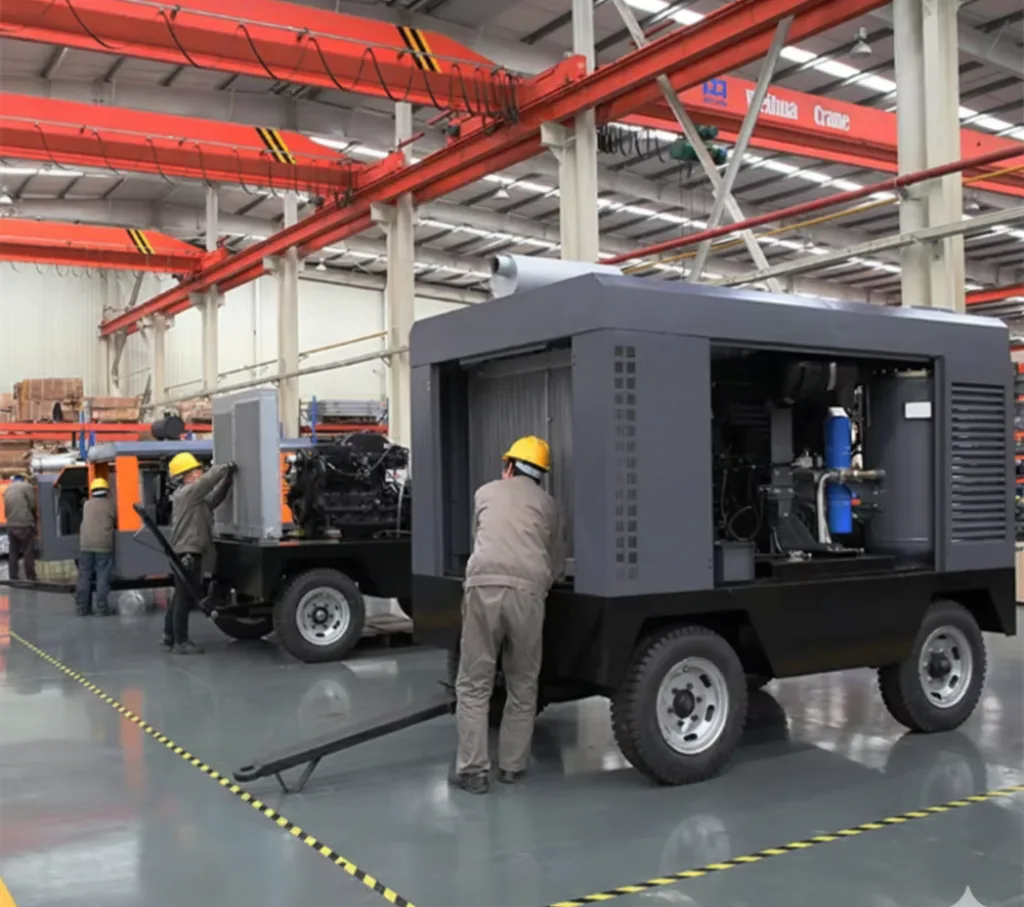
A 35 bar portable air compressor is a high-pressure mobile air solution often used in demanding oil and gas field operations. Since 35 bar is approximately 507 psi, this type of compressor is commonly discussed together with 500 psi portable air compressor applications.
In oil and gas projects, compressed air must be reliable, mobile, stable, and suitable for harsh field environments. A 35 bar portable diesel air compressor can support pipeline testing, pigging, pipeline cleaning, oilfield maintenance, drilling assistance, high-pressure service work, and surface preparation.
Peakroc® supplies practical mobile air compressors for drilling, mining, construction, industrial, and oil and gas field applications. Buyers can also review air compressor applications, industrial compressed air solutions, and Peakroc’s guide on how to choose a portable diesel air compressor for more selection support.
A good 35 bar compressor should provide stable pressure, sufficient air delivery, strong cooling performance, diesel engine reliability, safe operation, easy mobility, and convenient maintenance access.
What Is a 35 Bar Portable Air Compressor?
A 35 bar portable air compressor is a mobile compressed air system capable of delivering air at around 35 bar. In oil and gas applications, this type of compressor is usually diesel-driven because many jobs take place in pipeline corridors, oilfields, refineries, gas fields, or temporary maintenance sites where stable electrical power may not be available.
Compared with general construction compressors, a 35 bar portable compressor is designed for higher-pressure field work. It must maintain stable output during long operation, handle dusty or hot environments, and provide reliable pressure control for site crews. For oil and gas users, these details are important because compressor failure can delay pipeline work, surface preparation, pigging, drilling support, or shutdown maintenance.
A good 35 bar portable compressor should offer:
- Stable high-pressure air output
- Reliable diesel engine performance
- Strong cooling capacity
- Easy field mobility
- Clear monitoring and safety controls
- Convenient maintenance access
- Optional air treatment for drying or cleaning applications
Why 35 Bar / 500 PSI Matters in Oil and Gas
Oil and gas field work often requires stronger compressed air than ordinary utility air. Pipeline sections may be long, operating locations may change frequently, and some maintenance tasks require high-pressure pneumatic support. A 35 bar compressor provides a useful pressure range for demanding field work while remaining mobile enough for contractor use.
The practical value of 35 bar air is most obvious when the compressor must be moved directly to the job site. Pipeline projects, pigging operations, remote oilfield maintenance, and refinery shutdown work often happen far from fixed air systems. A portable diesel compressor gives operators a dependable air source that can follow the work rather than forcing the work to stay near a plant air system.
In oil and gas operations, the compressor is not only a power source. It is part of the project’s productivity system. Stable air pressure can reduce delays, improve tool performance, support cleaning and drying work, and help field teams complete tasks more efficiently.
Typical Applications of 35 Bar Portable Compressors
| Application | How 35 Bar Air Helps | Key Requirement |
|---|---|---|
| Pipeline testing support | Provides high-pressure air for testing preparation and field pressure support | Stable pressure and safety control |
| Pigging operations | Helps move pigs through pipeline sections | Controlled air delivery |
| Pipeline cleaning | Supports removal of debris, moisture, and residue | Continuous air supply |
| Pipeline drying | Helps remove moisture after cleaning or testing | Dry air system if required |
| Oilfield maintenance | Powers high-pressure service and pneumatic work | Reliable diesel operation |
| Drilling support | Assists flushing, cleaning, or auxiliary air demand | Pressure stability |
| Sandblasting | Supports surface preparation before coating | Stable pressure and moisture control |
| Refinery shutdown | Provides temporary high-pressure air during maintenance | Fast deployment and reliability |
Pipeline Testing Support
Pipeline testing is one of the most important uses for a 35 bar portable air compressor in oil and gas work. After pipeline construction, repair, or maintenance, compressed air may be needed for test preparation, pressure support, cleaning, or drying. A mobile high-pressure compressor allows contractors to bring air directly to the pipeline route instead of depending on fixed infrastructure.
In this application, stable output matters. If the compressor cannot hold pressure consistently, the work may slow down or require repeated adjustments. A 35 bar portable diesel compressor gives contractors a stronger field air source for demanding pipeline tasks, especially where long distance, difficult access, or temporary site conditions make fixed air supply impractical.
For pipeline work, buyers should usually confirm:
- Pipeline diameter and length
- Required working pressure
- Air flow demand
- Site safety requirements
- Working hours per day
- Need for dry air or filtration
- Towable or skid-mounted preference
Pigging Operations
Pigging is widely used for pipeline cleaning, separation, inspection preparation, and commissioning. A pig must move through the pipeline at a controlled speed, and compressed air can provide the force needed to move it through the line. In selected pigging operations, a 35 bar portable compressor can offer the pressure support needed for long or demanding pipeline sections.
The compressor should not only produce pressure; it should allow operators to monitor and control the process. Pressure display, fuel level monitoring, safety shutdowns, and stable engine performance all help keep the operation predictable. In field pigging work, interruptions can be costly, especially when the pipeline is long or access points are limited.
A 35 bar portable compressor is valuable here because it combines pressure capacity with mobility. The unit can be moved along the route, positioned near the work zone, and used as a temporary high-pressure air source for different sections of the pipeline.
Pipeline Cleaning and Drying
Pipeline cleaning and drying are common before commissioning or after maintenance. Compressed air can help remove debris, dust, moisture, and residue from the pipeline. When stronger air pressure is needed, a 35 bar portable compressor can provide the force required to support the process.
For drying applications, air quality becomes especially important. Moisture left inside the pipeline may cause corrosion, affect product quality, or create commissioning problems. Depending on the project, the compressor package may need additional accessories such as aftercoolers, water separators, refrigerated dryers, desiccant dryers, air receivers, and filters.
This is where the compressor becomes part of a complete field air system. The compressor supplies pressure, while air treatment equipment improves dryness and cleanliness. For oil and gas projects, planning these components together can reduce installation problems and improve site efficiency.
Oilfield Maintenance and High-Pressure Service
Oilfield maintenance often happens in harsh environments. Equipment may be located in dusty, hot, remote, or difficult-to-access areas. Maintenance teams need machines that can start reliably, run for long periods, and be serviced quickly in the field.
A 35 bar portable air compressor can support high-pressure pneumatic service, equipment cleaning, valve maintenance, general field support, and selected tool operations. Because it is diesel-driven, it can work independently without a fixed electrical supply. This makes it useful for mobile crews that move between wells, stations, pipeline sections, or maintenance areas.
For this application, durability is more than a selling point. It directly affects job completion. A suitable oilfield compressor should have a strong cooling system, reliable diesel engine, rugged enclosure, good filtration, and safety protection against abnormal operating conditions.
Drilling and Exploration Support
In oil and gas exploration or drilling-related support, compressed air may be used for borehole cleaning, flushing support, auxiliary tools, or field equipment operation. A 35 bar portable air compressor provides high-pressure air where stronger output is required.
The advantage of a portable unit is flexibility. Exploration work often moves from one location to another, so a fixed air system is not practical. A towable or skid-mounted compressor can follow the crew and reduce site preparation time. This improves productivity, especially when the project requires fast movement between drilling points.
For drilling support, continuous operation is important. The compressor should maintain stable pressure while protecting the engine and air end from overheating. In difficult terrain or hot climates, cooling design and maintenance access become especially important.
Sandblasting and Surface Preparation
Sandblasting is widely used in oil and gas maintenance, especially for pipelines, storage tanks, refinery equipment, valves, and steel structures. Compressed air drives abrasive material at high speed to remove rust, paint, scale, and surface contamination before coating or repair.
A 35 bar portable compressor can support demanding surface preparation work where strong air pressure is required. Stable air output helps maintain blasting quality and working speed. Moisture control is also important because wet air can affect abrasive flow and surface cleanliness, especially before coating.
In many projects, the compressor may be combined with air treatment equipment. This helps improve blasting performance and reduce coating quality problems caused by moisture or contamination.
Refinery Shutdown and Temporary Air Supply
During refinery or gas plant shutdowns, compressed air is often needed for cleaning, testing, tool operation, and temporary process support. Shutdown schedules are usually tight, and delays can be expensive. A reliable portable compressor helps maintenance teams deploy temporary air quickly.
A 35 bar compressor can provide temporary high-pressure air when fixed plant systems are unavailable, overloaded, or under maintenance. The compressor can be moved into position, connected to the work area, and used to support different maintenance teams.
For shutdown projects, the compressor should be easy to operate and quick to service. Clear monitoring, automatic protection, good fuel capacity, and reliable spare parts support are all important for reducing downtime.
Main Benefits of a 35 Bar Portable Air Compressor
A 35 bar portable compressor brings practical value to oil and gas users because it combines high-pressure capability with field mobility. It is not limited to one fixed work area and can support different tasks across pipeline, refinery, and oilfield environments.
Key benefits include:
- Around 500 psi high-pressure capability
- Mobile operation for remote sites
- Diesel-powered independence
- Strong support for pipeline and oilfield service
- Stable air supply for demanding tasks
- Better productivity in field maintenance
- Flexible use across multiple job sites
- Reduced dependence on fixed plant air
For contractors, this flexibility can improve equipment utilization and project response speed.
Technical Features to Consider
| Feature | Why It Matters |
|---|---|
| Diesel engine | Provides independent power in remote field conditions |
| Screw air end | Supports continuous-duty compressed air production |
| Cooling system | Helps maintain stable operation in hot environments |
| Pressure control | Keeps output stable and improves operating safety |
| Fuel tank capacity | Supports longer operation between refueling |
| Safety shutdowns | Protects the compressor from abnormal conditions |
| Towable or skid-mounted design | Improves field mobility |
| Service access | Reduces maintenance time |
| Air treatment options | Supports drying, cleaning, and sensitive applications |
A well-designed 35 bar compressor should be easy to operate and maintain. In field service, small design details such as access doors, filter location, lifting points, control panel layout, and drain design can make a real difference.
Safety and Maintenance Considerations
High-pressure compressed air must be handled carefully. Oil and gas projects often have strict site safety rules, so the compressor should include pressure relief protection, emergency stop, high temperature shutdown, low oil pressure shutdown, fuel monitoring, automatic unload protection, and clear warning alarms.
Operators should also inspect hoses, couplings, valves, and connections before use. High-pressure air systems should not be operated with damaged hoses or loose fittings.
Maintenance is also critical. A 35 bar portable compressor works under demanding pressure and field conditions, so routine inspection helps prevent downtime. Important maintenance points include:
- Engine oil and filters
- Compressor oil
- Air filter
- Oil separator
- Fuel filter
- Cooling system
- Hose and valve inspection
- Safety valve testing
- Condensate draining
- Control panel alarms
For oil and gas contractors, maintenance records help track operating hours and reduce unexpected breakdowns during important field work.
Practical Buying Checklist
Before requesting a quotation for a 35 bar portable air compressor, prepare the following information:
- Main application
- Required working pressure
- Required air flow
- Working hours per day
- Pipeline size and length if applicable
- Site temperature
- Altitude
- Fuel condition
- Air quality requirement
- Dryer or filter requirement
- Towable or skid-mounted preference
- Local safety or emission requirements
- Delivery location
- Spare parts requirement
With this information, the supplier can recommend a more accurate compressor solution and avoid mismatch problems.
Final Recommendation
A 35 bar portable air compressor for oil and gas is a practical choice for projects that need stable high-pressure air in remote or temporary field conditions. It can support pipeline testing, pigging, cleaning, drying, oilfield maintenance, drilling support, sandblasting, and temporary air supply.
Peakroc® can help customers choose and purchase a suitable compressor based on pressure, air flow, application, site environment, mobility, air quality, and maintenance needs. In addition to Peakroc® portable compressor solutions, we can also assist with inquiries and comparison for brands such as Atlas Copco, Sullair, and Ingersoll Rand when required.
For project evaluation or procurement assistance, contact Peakroc® with your working conditions and technical requirements.
FAQ
1. What is a 35 bar portable air compressor used for in oil and gas?
It is used for pipeline testing support, pigging, pipeline cleaning and drying, oilfield maintenance, drilling support, sandblasting, and temporary high-pressure field air supply.
2. Why choose a diesel portable compressor for oil and gas sites?
A diesel portable compressor can operate in remote field locations without fixed electrical power and can be moved between pipeline sections, oilfield sites, and maintenance areas.
3. Can a 35 bar compressor be used for pipeline pigging?
Yes, it can support selected pigging operations where high-pressure compressed air is required. The compressor should be matched with the pipeline size, pig type, and operating procedure.
4. Does a 35 bar portable compressor need air treatment?
Some applications may need air treatment. Pipeline drying, coating preparation, sandblasting, and sensitive maintenance tasks may require dryers, filters, water separators, or air receivers.
5. Does Peakroc® only supply its own brand compressors?
No. Peakroc® can provide its own compressor solutions and can also assist with consultation for brands such as Atlas Copco, Sullair, Ingersoll Rand, and other compressor options when needed.
Author

Mark Chen – Senior Mechanical Engineer, Peakroc®
Mark Chen is a senior mechanical engineer at Peakroc®, specializing in compressed air systems and drilling equipment for mining and construction applications. With over 15 years of field experience, he has led multiple projects on optimizing air delivery efficiency, equipment durability, and energy consumption.