
Key Takeaways
- The MPV maintains the internal separator-vessel pressure needed for stable oil circulation and separation while also helping prevent downstream compressed air from flowing backward after shutdown.
- Stuck closed: vessel pressure rises but downstream pressure remains very low or zero. Severe blockage can lead to dangerous separator-vessel overpressure and safety-valve operation.
- Stuck open or leaking: vessel pressure builds too slowly during startup or unloaded operation, potentially contributing to poor oil separation and oil carryover.
- On Peakroc® portable diesel screw compressors such as the 20 m³/min, 13 bar portable compressor, compare separator pressure with downstream pressure before replacing valves or separator components.
- Do not apply a universal MPV opening-pressure value. The correct minimum pressure depends on the compressor design and should be checked against the specification for the exact machine.
The minimum pressure valve is small compared with the airend or diesel engine, yet its failure can create symptoms that look like major compressor faults.
A machine may run normally but produce almost no air at the outlet. Another may build excessive internal pressure and open the safety valve. A third may still make air but begin carrying compressor oil into downstream hoses.
The fastest way to separate these problems is not to begin by replacing the valve.
Begin by asking:
What is the separator-vessel pressure, and what is the pressure downstream of the MPV?
That pressure relationship is the central diagnostic clue.
How the MPV Controls Pressure and Oil Separation
In an oil-injected screw compressor, the airend discharges an air/oil mixture into the separator vessel.
Oil is separated and returned to the lubrication circuit while compressed air moves toward the outlet.
During startup, the compressor cannot simply release all airflow into an empty downstream system immediately.
It first needs to establish sufficient pressure inside the separator vessel.
The MPV remains closed during this initial pressure build-up and begins opening only after the machine reaches its designed minimum internal pressure.
A simplified flow path is:
Airend → Separator Vessel → MPV → Aftercooler / Outlet → Air System
That internal pressure helps support oil circulation and efficient air/oil separation.
The MPV commonly performs a second function as well: preventing compressed air stored downstream from flowing backward into the compressor after shutdown. The independent troubleshooting reference describes these minimum-pressure and check-valve functions as the two fundamental roles of the component.
This explains why an MPV problem can affect three apparently unrelated areas:
pressure build-up + oil carryover + shutdown backflow.
Diagnose Stuck Closed and Stuck Open From the Pressure Pattern
The two main MPV failure modes behave almost opposite to each other.
| Condition | Separator Vessel Pressure | Outlet Pressure | Typical Clue |
|---|---|---|---|
| MPV stuck closed | High / rising | Very low or zero | Compressor produces air but it cannot leave vessel |
| MPV stuck open / leaking | Slow or low build-up | May rise early | Poor initial vessel pressure, possible startup oil carryover |
| Loading/inlet fault | Low | Low | Compressor may not actually be loading |
| Separator/discharge restriction | High | Reduced | Outlet generally not completely zero |
| MPV check function leaking | — | Pressure decays after shutdown | Possible reverse airflow |
When the MPV Is Stuck Closed
A stuck-closed MPV does not necessarily stop the airend from compressing air.
Instead, the compressed air becomes trapped inside the separator vessel.
The characteristic pattern is:
High separator pressure + very low or zero downstream pressure
The reference troubleshooting material specifically identifies this large pressure difference as the strongest diagnostic sign of a stuck-closed MPV. It also warns that internal pressure can continue increasing and create a serious overpressure condition.
This is why an operator saying:
“The compressor is running but no air comes out.”
does not prove the airend has failed.
If separator pressure is already high, the airend is clearly producing pressure.
The next question becomes:
Why can that pressure not reach the outlet?
The MPV and the discharge path immediately downstream deserve attention.
When the MPV Is Stuck Open or Leaking
A leaking valve creates a different problem.
Air is released downstream before the separator vessel establishes its intended internal pressure.
The compressor may therefore show:
slow startup pressure build-up, unusually low vessel pressure, or unstable pressure during load transitions.
Low internal pressure can also affect separator performance.
The independent MPV troubleshooting guidance notes that when the valve opens too early, the separator may experience high airflow at low pressure during startup, allowing more oil to enter the downstream air system.
This makes MPV inspection especially relevant when oil carryover occurs mainly during:
startup, unloading, very low-pressure operation, or load transitions.
Peakroc Field Cases: Why Pressure Location Matters More Than Guessing
Peakroc’s existing troubleshooting material shows why MPV diagnosis should be treated as a system problem rather than a valve-replacement exercise.
Peakroc Field Case 1: Engine Running, Internal Pressure High, No Useful Air
Peakroc’s portable screw compressor troubleshooting guide documents the diagnostic pattern of a machine that starts and runs but fails to deliver useful outlet air.
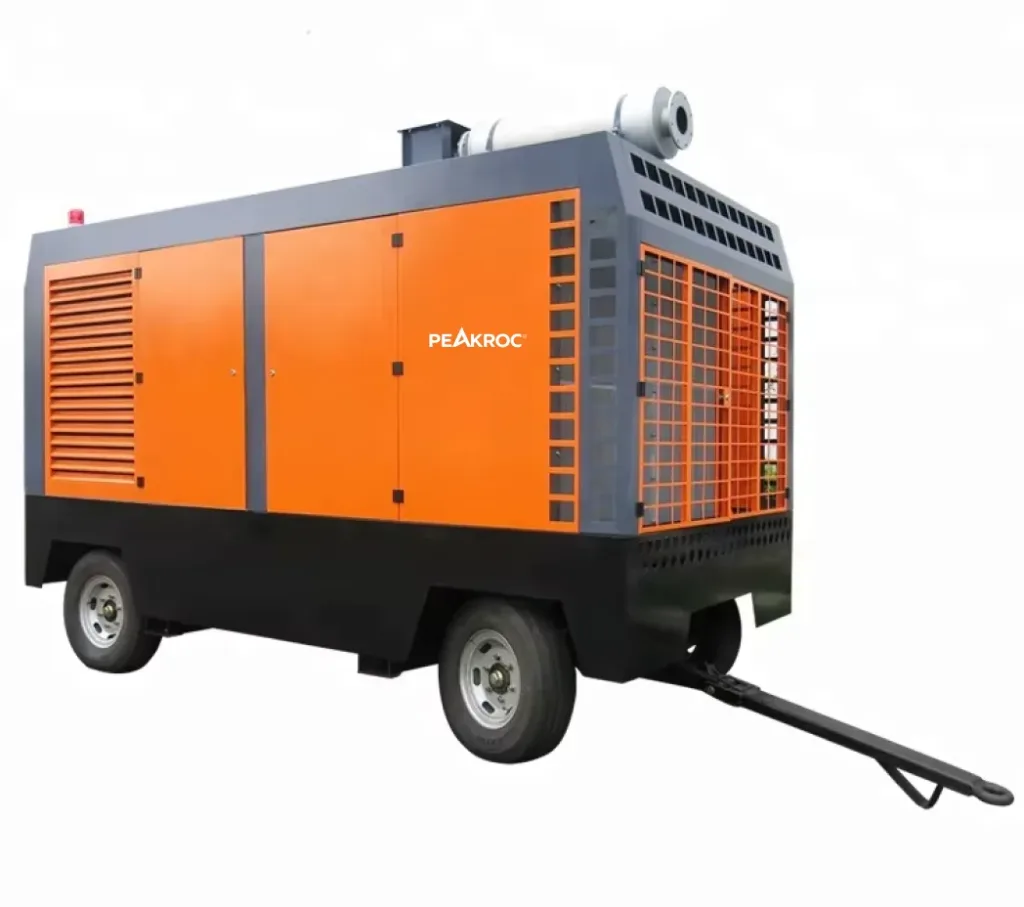
One possible cause is an MPV that remains fully closed.
In that condition:
separator pressure builds → downstream pressure stays near zero → controller sees high internal pressure → compressor unloads
The important diagnostic lesson is that the compressor may appear to “fail to load” from the operator’s perspective even though the airend is producing pressure.
Peakroc’s field guidance therefore recommends distinguishing the fault from an intake-valve or controller problem by checking pressure location.
If both internal and outlet pressure remain low, investigate loading and inlet control.
If internal pressure is high while outlet pressure remains near zero, move the investigation toward the MPV and discharge path.
This simple comparison can avoid unnecessary work on the airend, inlet valve, sensors, or controls.
Peakroc Field Case 2: Oil Carryover Continues After Separator Replacement
A second Peakroc field pattern involves a compressor that begins or continues passing excessive oil even after the separator element has been replaced.
The immediate conclusion is often:
“The new separator must be defective.”
Peakroc’s oil-separator troubleshooting guidance recommends a different approach.
Before replacing another element, inspect:
scavenge return → oil level → lubricant condition → separator installation → vessel pressure / MPV
The same Peakroc guidance specifically notes that when oil carryover is strongest during startup, unloading or low-pressure operation, the minimum-pressure system deserves additional attention.
This case illustrates an important EEAT principle in compressor service:
A replaced component failing to solve the symptom is evidence that the original diagnosis may have been incomplete.
Instead of replacing the separator again, technicians should verify whether the pressure and oil-return systems are allowing the separator to work correctly.
For the complete diagnostic path, see Peakroc’s Oil Separator Failure and Oil Carryover Guide.
Oil Carryover, Backflow, and Safety Valve Operation
The field cases above also explain why MPV faults can appear outside normal pressure troubleshooting.
Oil Carryover
A leaking or prematurely opening MPV can reduce vessel pressure during the stage when the separator needs stable internal conditions.
However, MPV should not automatically be blamed for every oil problem.
A practical sequence is:
Oil level → Lubricant → Separator → Scavenge Circuit → Vessel Pressure / MPV
Peakroc’s service material makes the same distinction: oil carryover is a complete separator-system diagnosis rather than a separator-element diagnosis alone.
Backflow After Shutdown
Because the MPV commonly incorporates a non-return function, a worn valve seat, damaged seal, contamination, or weak spring may allow downstream compressed air to leak back after shutdown.
Possible signs include unusual hissing or faster-than-expected downstream pressure loss.
That symptom alone is not enough to prove MPV failure because leaks elsewhere can produce similar behaviour.
But it is a useful reason to test the valve’s check function.
Safety Valve Blow-Off
A stuck-closed MPV can create a more serious condition.
If the airend continues compressing while the discharge path remains blocked, separator-vessel pressure rises.
The safety system should unload or stop the compressor, but if pressure approaches the relief setting, the safety valve may open.
The troubleshooting reference emphasizes that stuck-closed MPV and clogged separator can both produce elevated internal pressure, but a completely stuck MPV is more likely to produce very high separator pressure while downstream pressure remains near zero.
Never solve repeated safety-valve operation by increasing the relief setting.
Find the reason pressure is rising.
Inspect the MPV Only After the Pressure System Has Been Made Safe
An MPV is connected directly to a pressurized separator vessel.
Mechanical inspection should therefore begin only after the compressor is stopped, isolated, prevented from restarting, and fully depressurized.
OSHA’s hazardous-energy standard requires stored or residual energy to be relieved, disconnected, restrained, or otherwise rendered safe before covered servicing begins, and isolation must be verified before work starts.
After zero pressure has been confirmed, MPV inspection can concentrate on five areas:
- piston or poppet movement;
- spring condition;
- valve seat and sealing surfaces;
- O-rings and seals;
- sludge, carbon, corrosion, or debris.
A mechanically healthy valve should move freely according to its design and return under spring force.
The reference troubleshooting guidance recommends rebuilding or replacing a valve when the piston is seized, the spring is damaged, or internal wear prevents correct operation. Cleaning and a proper seal kit may be enough when contamination is the main problem and the valve body remains serviceable.
Do Not Guess the Opening Pressure
Generic online values are useful for understanding how an MPV works, but they should not become adjustment specifications.
Portable compressors range from standard-pressure machines to high-pressure drilling units.
Peakroc’s current range itself includes machines such as the 20 m³/min 13 bar platform and 39 m³/min 25 bar high-pressure platform, which illustrates how different compressor architectures and pressure classes can be.
The correct MPV minimum/opening pressure should therefore come from the service specification for the exact compressor model.
Changing the valve spring based on a generic number can alter:
oil circulation, separator performance, unloading behaviour, and downstream airflow.
Clean, Rebuild, or Replace?
The condition found during inspection determines the repair.
Cleaning or rebuilding may be reasonable when contamination is restricting movement but:
the valve body, piston, seat, and spring remain serviceable.
Complete replacement becomes more appropriate when:
- the seat or body is badly scored;
- corrosion prevents reliable sealing or movement;
- the spring is broken or severely weakened;
- rebuilding fails to restore correct pressure behaviour.
After repair, do not judge success only by whether the valve moves by hand.
Run the compressor through its normal operating sequence and verify:
normal initial vessel-pressure build → correct outlet pressure → stable loaded/unloaded behaviour → no abnormal pressure difference → normal shutdown without backflow
If the original symptom was oil carryover, evaluate oil consumption over subsequent operating time rather than only the first few minutes.
Peakroc’s separator-service guidance notes that oil already accumulated in aftercoolers, hoses, and downstream piping can continue appearing temporarily even after the original fault has been corrected.
Final Recommendation
Minimum pressure valve troubleshooting should begin with pressure behaviour, not parts replacement.
If:
separator pressure is high but outlet pressure is near zero,
investigate the MPV and discharge path.
If:
separator and outlet pressure are both low,
move the diagnosis upstream toward loading, inlet control, or another pressure-generation problem.
If:
vessel pressure builds slowly and oil carryover is strongest during startup or low-pressure operation,
include a leaking or prematurely opening MPV in the investigation.
If:
air appears to flow backward after shutdown,
inspect the valve’s non-return function.
The practical troubleshooting path is:
Symptom → Vessel Pressure → Outlet Pressure → Stuck Open vs Closed → Related Separator/Oil Checks → Safe Inspection → Repair or Replace → Verify Full Operation
The MPV is a relatively small compressor component, but its failure can affect oil circulation, separator efficiency, outlet airflow, shutdown behaviour, and pressure-vessel safety.
The two Peakroc field cases make the same point:
measure the system before replacing the component.
That approach reduces unnecessary separator changes, avoids misdiagnosing airend or inlet problems, and makes MPV troubleshooting much faster and more reliable.
FAQ
What happens when a minimum pressure valve is stuck closed?
Separator-vessel pressure rises while outlet pressure remains very low or zero. If pressure continues increasing, the compressor may unload, shut down, or operate the safety valve.
What happens when the MPV is stuck open?
The compressor may struggle to establish its intended initial vessel pressure. This can affect oil circulation and separator performance and may contribute to oil carryover during startup.
Can a minimum pressure valve cause oil carryover?
Yes. Incorrect vessel pressure can reduce separator effectiveness, especially during startup or low-pressure operation. Oil level, separator condition, scavenge return, lubricant, and temperature should also be checked.
How can I distinguish an MPV fault from an inlet-valve problem?
Compare separator and downstream pressure. High vessel pressure with near-zero outlet pressure points toward the MPV or discharge path. If both pressures remain low, an upstream loading problem is more likely.
What pressure should a minimum pressure valve open at?
There is no universal setting for every screw compressor. Use the minimum/opening-pressure specification for the exact compressor model.
Author

Mark Chen – Senior Mechanical Engineer, Peakroc®
Mark Chen is a senior mechanical engineer at Peakroc®, specializing in compressed air systems and drilling equipment for mining and construction applications. With over 15 years of field experience, he has led multiple projects on optimizing air delivery efficiency, equipment durability, and energy consumption.