
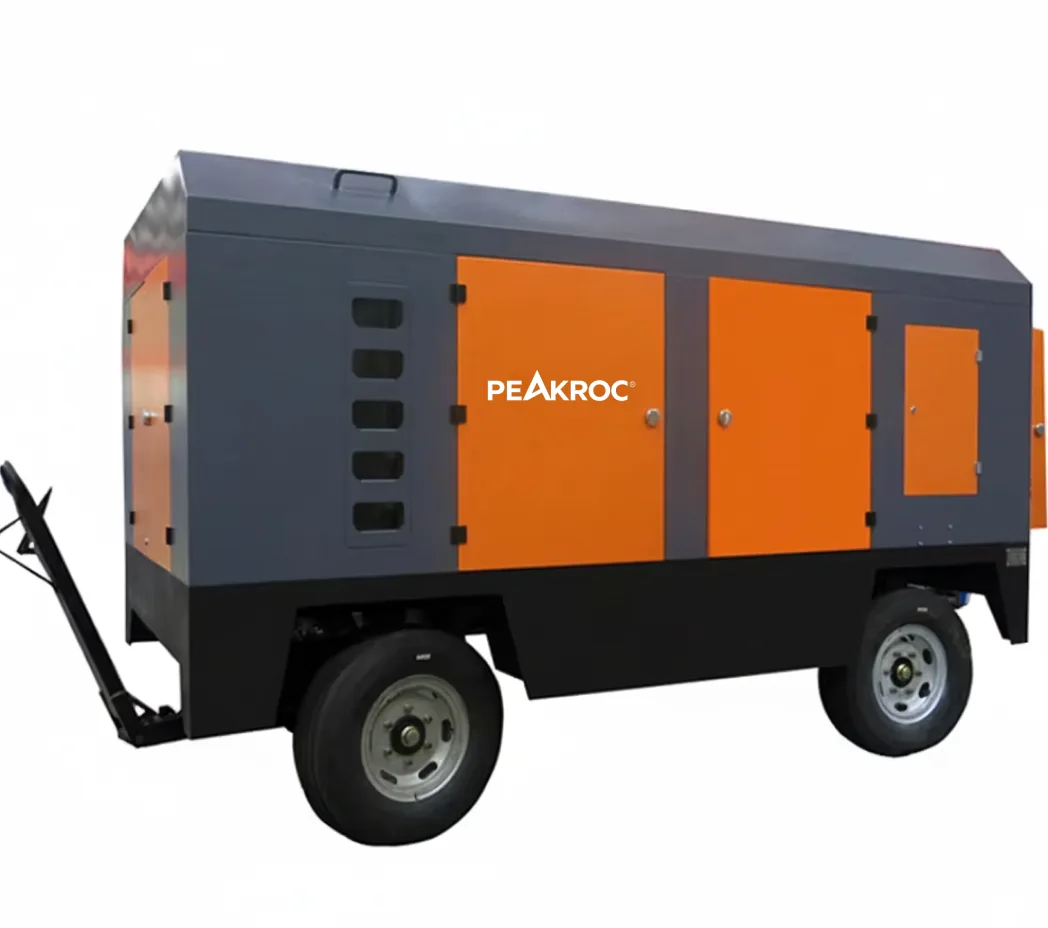
13 m³/min 13 bar Portable Diesel Air Compressor for Drilling-Mining-Blasting
13 bar · 13 m³/min · 142 kW · Cummins
VIEW MOREPeakroc®
Air Compressor
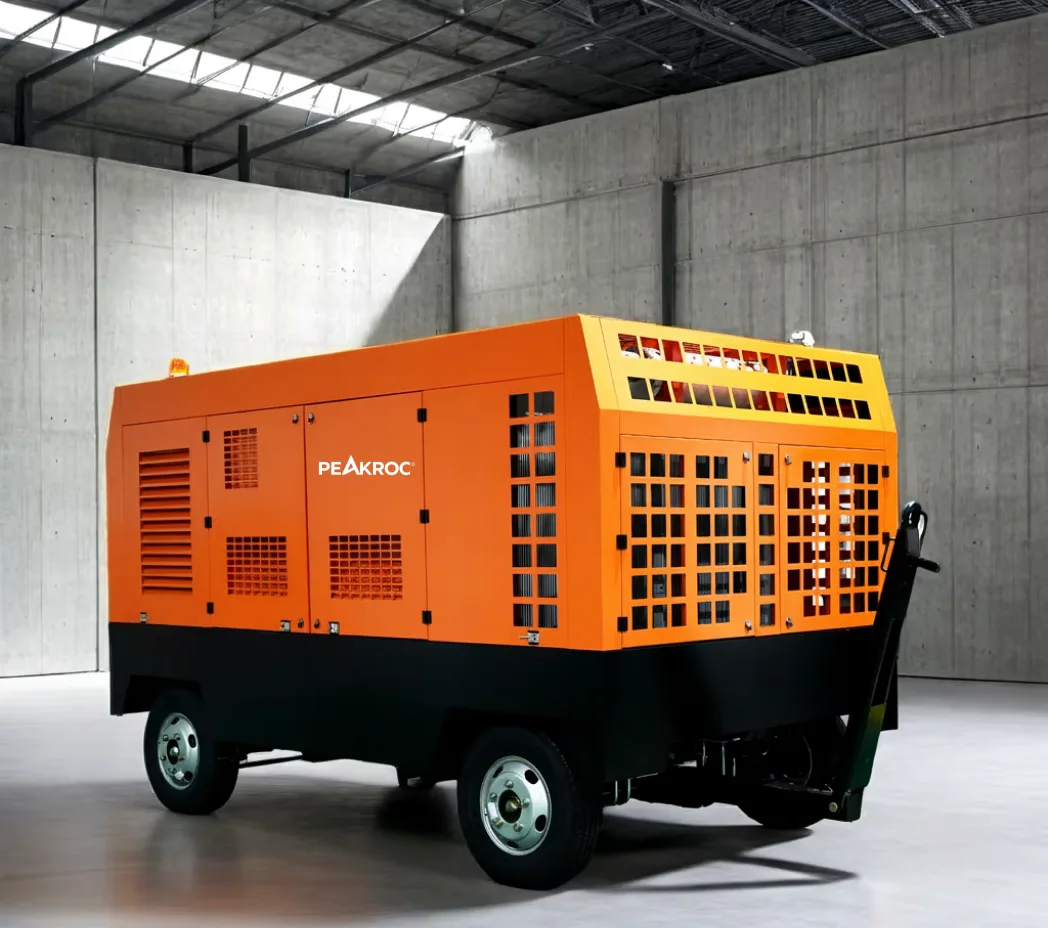
39 m³/min
25 bar
522 kW
Cummins
The Peakroc® PRMD-3925 is an ultra-high-pressure portable diesel air compressor engineered for extreme-depth drilling and hard rock applications where standard compressors cannot deliver adequate pressure. With 39 m³/min airflow at 25 bar (363 psi), this unit powers 10–12 inch DTH hammers for boreholes exceeding 800 meters, penetrates ultra-hard rock formations (granite, quartzite, basalt >200 MPa), and supports high-pressure industrial processes including oilfield gas lift, geothermal well development, and pipeline hydrostatic testing to API 1104 standards.
Why 25 Bar Matters:
At drilling depths beyond 600–800 meters, backpressure from the borehole column reduces effective hammer pressure by 8–12 bar. A 13 bar compressor delivering 13 bar at surface may only provide 5–7 bar at the hammer face at 800m depth—insufficient for efficient rock breaking. The PRMD-3925’s 25 bar output ensures 15–18 bar reaches the drill bit even at 1,000+ meter depths, maintaining impact energy and penetration rates in deep geothermal wells, scientific drilling projects, and ultra-deep water supply boreholes.
Core Applications:
✓ Geothermal exploration & production wells: 800–1,500m depth
✓ Deep water well drilling: Municipal supply, irrigation, mining dewatering >800m
✓ Hard rock mining: Blast holes and production drilling in granite, quartzite, basalt
✓ Oilfield operations: Gas lift, underbalanced drilling, well cleanout, nitrogen injection
✓ Pipeline testing: Hydrostatic & pneumatic testing for DN800–DN1400 transmission lines
✓ Tunnel & underground construction: High-pressure shotcrete, rock bolting, deep shaft sinking
Global Certifications & Standards:
ISO9001 Quality Management System
UKAS Quality Management Certification
CE Marking (European Union Safety Compliance)
API compliance for oilfield & pipeline applications
The Peakroc® PRMD-3925 (39 m³/min · 25 bar) is specifically engineered for extreme-pressure applications where conventional compressors cannot deliver adequate performance:
The Peakroc® PRMD-3925 delivers a free air delivery of 39 m³/min at 25 bar (1375 cfm / 363 psi), engineered for deep well drilling, geothermal projects, high-pressure DTH drilling, oilfield operations, and pipeline pressure testing. Equipped with a heavy-duty Cummins diesel engine and a high-pressure screw air end, this compressor provides strong airflow, stable high pressure, fuel efficiency, and outstanding durability in harsh field environments.
With 39 m³/min airflow and 25 bar pressure, this compressor is ideal for deep borehole drilling, reverse circulation drilling, and high-pressure applications such as oilfield gas lift and pipeline hydrostatic testing. It delivers consistent pressure for continuous heavy-duty operation.
The compressor is powered by a turbocharged Cummins diesel engine, providing high torque output, strong power, and fuel efficiency. The reinforced chassis and 2 mm thick sound-proof steel enclosure offer resistance to vibration, harsh terrain, and extreme working environments.
Built with an advanced SAP rotor profile and alloy steel rotors, the screw air end is designed for high-pressure performance. SKF bearings and precision machining ensure reduced leakage, high compression efficiency, and longer service life.
A dual-stage air filtration system removes up to 99.9% of dust and impurities, protecting the air end and diesel engine. A large-capacity oil separator, high-efficiency radiator, and optimized air cooling pathway maintain stable performance in hot, dusty, or high-altitude sites.
Compare the 39 m³/min · 25 bar ultra-high-pressure model with other Peakroc compressors. This is the highest-pressure portable unit in our range—choose it only when deep drilling or extreme applications demand 20+ bar sustained pressure.
| Model | Air Delivery | Pressure | Engine Power | Best For |
|---|---|---|---|---|
| PRMD-2013 | 20 m³/min (710 cfm) |
13 bar (189 psi) |
194 kW (260 hp) |
Medium-depth wells (200–500m), 6–8″ DTH hammers, general mining blast holes. Most versatile mid-pressure unit. |
| PRMD-2220 | 22 m³/min (777 cfm) |
20 bar (290 psi) |
280 kW (375 hp) |
Deep wells (500–800m), hard rock drilling, high-pressure pipeline testing. Step-up from 13 bar for deeper applications. |
| PRMD-3425 | 34 m³/min (1200 cfm) |
25 bar (363 psi) |
410 kW (550 hp) |
Ultra-deep drilling (>800m), 10–12″ DTH hammers, hard rock mines. Lower airflow than PRMD-3925 but same pressure. |
| PRMD-3925 (Current Model) |
39 m³/min (1375 cfm) |
25 bar (363 psi) |
522 kW (700 hp) |
Extreme depth (800–1,500m), geothermal wells, oilfield operations, large DTH hammers (10–14″). Highest flow in 25 bar class. |
| PRMD-3335 | 33 m³/min (1165 cfm) |
35 bar (508 psi) |
522 kW (700 hp) |
Scientific drilling, ultra-hard rock (basalt, quartzite), extreme-depth geothermal (>1,500m). Maximum pressure for specialized applications. |
Important: The PRMD-3925 consumes 40–50 L/hour at full load. Only select this model if your application genuinely requires 20+ bar sustained pressure—operating costs are 2–3x higher than 13 bar units. For wells under 600m, lower-pressure models offer better economy.
| Location: | Reykjanes Peninsula, Southwest Iceland |
| Client: | Landsvirkjun (National Power Company) – Geothermal Division |
| Application: | Binary cycle geothermal production well drilling |
| Depth Target: | 1,200 meters (reaching 240°C reservoir temperature) |
| Formation: | Volcanic basalt with interbedded hyaloclastite (highly abrasive) |
| Equipment Deployed: | 2 units PRMD-3925 compressors + Atlas Copco COP1238 (12″ DTH hammer) |
| Project Duration: | 14 weeks (October 2023 – January 2024) |
The drilling contractor needed to penetrate 1,200 meters of dense basalt to reach a high-enthalpy geothermal reservoir. Previous attempts with 17 bar compressors failed at 850m depth due to insufficient pressure—the backpressure from the deep borehole column reduced effective hammer pressure to only 8–10 bar, causing drilling speed to drop below 0.5 m/hour (uneconomical). The project required:
Peakroc deployed two PRMD-3925 units operating in primary/standby configuration. Key specifications:
“We’d tried this well twice before with 17 bar compressors and couldn’t get past 850 meters economically. The PRMD-3925’s 25 bar output was the difference between success and failure. At 1,000+ meters depth, you absolutely need that extra pressure margin—there’s no substitute.”
“What impressed us most was the reliability in Icelandic winter. These machines ran 18–20 hours a day in freezing wind and never missed a beat. The 1,000-liter fuel tanks meant we only refueled once per shift, keeping drilling operations continuous.”
— Gunnar Sveinsson, Senior Drilling Engineer, Landsvirkjun
The PRMD-3925 proved essential for achieving economically viable penetration rates in ultra-deep geothermal drilling. The combination of 25 bar pressure and 39 m³/min flow enabled completion of a well that had previously defeated lower-pressure equipment. Landsvirkjun has since specified PRMD-3925 units for all future wells targeting depths beyond 900 meters.
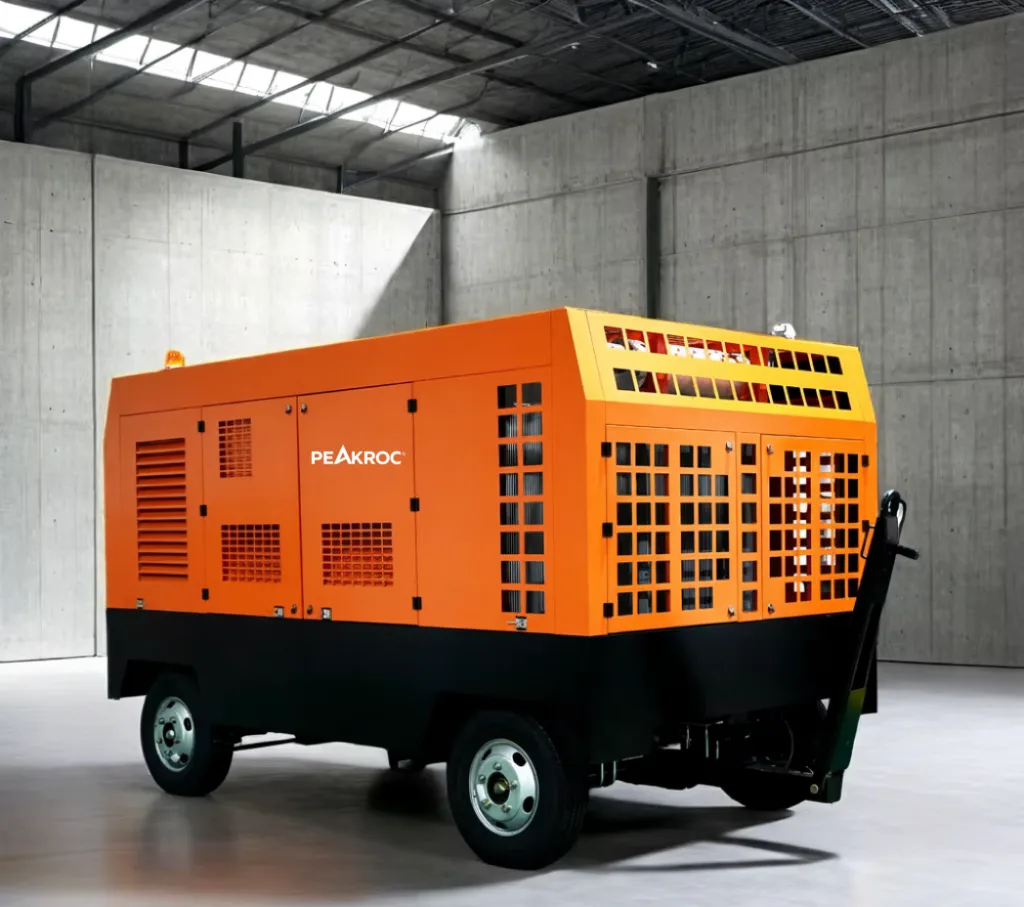
A practical decision table for 39 m³/min · 25 bar ultra-high-pressure compressors in deep drilling, geothermal, and hard rock applications. This is specialized equipment—only choose it if your application genuinely requires 20+ bar sustained pressure.
| Job Type | Typical Requirement | PRMD-3925 Suitability |
|---|---|---|
| Geothermal well drilling (800–1,500m) | 10–12″ DTH hammers, high backpressure at depth, volcanic basalt/andesite formations | Excellent fit – 25 bar maintains 18–20 bar effective pressure at 1,000m depth; 39 m³/min clears large-diameter boreholes |
| Ultra-deep water wells (>800m) | Municipal supply, irrigation, mining dewatering in deep confined aquifers | Excellent fit – Essential for drilling beyond 800m where lower-pressure units lose effectiveness due to backpressure |
| Hard rock mining (granite, quartzite, basalt) | Blast holes and production drilling in rock >200 MPa compressive strength | Excellent fit – 25 bar enables economically viable penetration rates (2–3 m/h) where 13–17 bar units struggle |
| Oilfield gas lift & foam drilling | Artificial lift for marginal wells, underbalanced drilling with high air-to-liquid ratios | Excellent fit – High pressure and flow support efficient foam generation and continuous gas lift operations per API RP 11V2 |
| Large pipeline testing (DN800–DN1400) | Pneumatic pressure test to 1.5x MAOP per ASME B31.4/B31.8, high-volume fast pressurization | Excellent fit – 25 bar meets test requirements; 39 m³/min reduces pressurization time by 50–60% vs smaller units |
| Deep shaft sinking (>500m vertical) | Mine shaft ventilation, tool air distribution through vertical shafts, high-pressure shotcrete | Good fit – High pressure enables long-distance air distribution without intermediate boosters |
| Medium-depth wells (400–700m) | 8–10″ DTH hammers, moderate formations, standard drilling operations | Over-specified – Use 20 bar model instead; 25 bar wastes fuel for this depth range |
| Shallow wells (<400m) | 6–8″ DTH hammers, soft to medium rock, conventional water well drilling | Not suitable – Massive overkill. Use 13 bar model for 60% fuel savings |
Critical Note: The PRMD-3925 is purpose-built for extreme applications. At full load, it consumes 40–50 liters of diesel per hour and requires robust fuel supply infrastructure. Only specify this model when 25 bar pressure is genuinely required—unnecessary use wastes fuel and accelerates wear on high-pressure components. For 90% of drilling applications, our 13–20 bar models offer better economy.
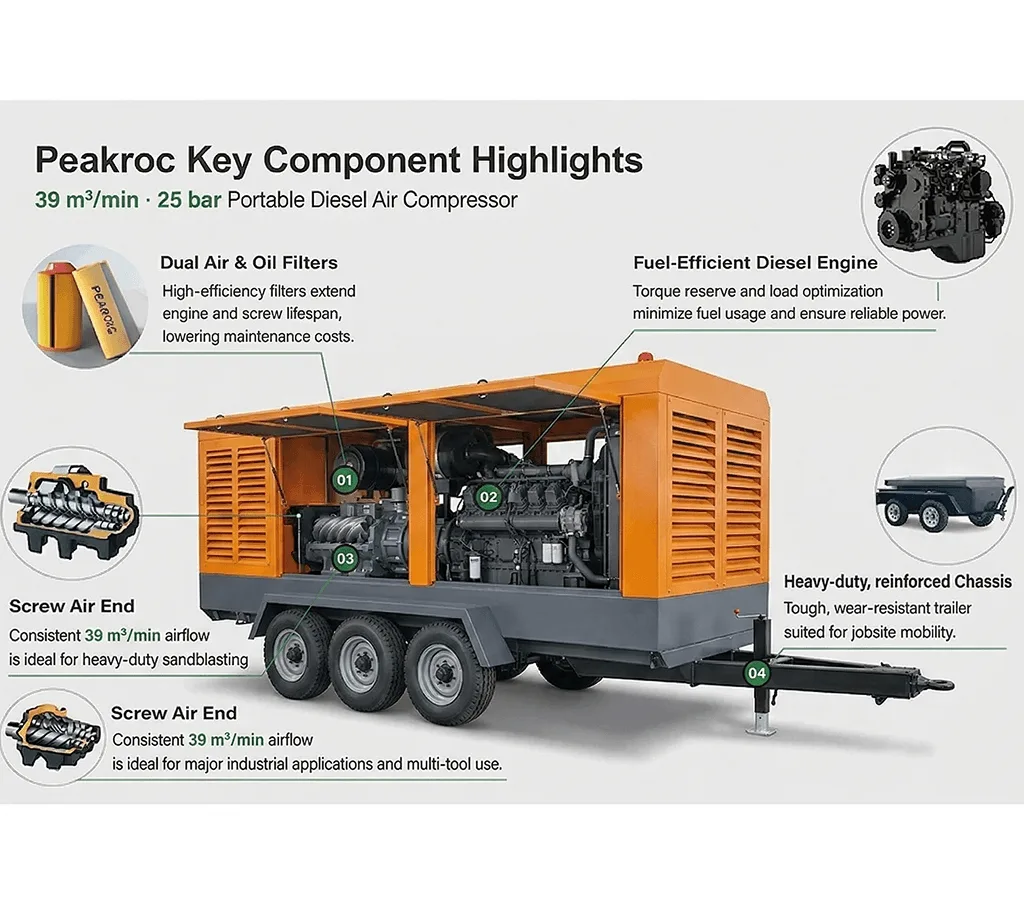
Designed for ultra-deep drilling (800–1,500m), geothermal wells, and hard rock mining, this 39 m³/min · 25 bar unit delivers the highest pressure in Peakroc’s portable range. Built for extreme conditions—volcanic formations, desert heat, Arctic cold, and continuous 18–20 hour shifts.
Three-stage compression design with hardened alloy steel rotors delivers sustained 25 bar output. Advanced rotor profile optimized for high-pressure efficiency—8% better volumetric efficiency than standard designs. SKF heavy-duty bearings rated for 60,000+ hours continuous operation. Precision-machined housing withstands 30 bar peak pressure during load/unload cycles.
522 kW (700 hp) turbocharged and aftercooled six-cylinder engine provides reliable power for 25 bar compression. High-altitude capable—maintains 90–95% rated power at 5,000m elevation. Proven reliability in oilfield, mining, and marine applications worldwide. Service interval: 500 hours. Global Cummins parts network in 190+ countries ensures minimal downtime.
100-liter coolant capacity with 3.5 m² aluminum radiator prevents overheating in ambient temperatures up to 50°C. Hydraulic-driven variable-speed cooling fan optimizes thermal management while reducing parasitic power loss. Designed for continuous operation in desert drilling (Middle East, Australia), volcanic geothermal sites (Iceland, Indonesia), and high-altitude mines (Andes, Tibet).
Dual-stage air intake with cyclonic pre-separator captures 99.9% of particles >5 microns—essential for volcanic ash environments (geothermal drilling) and dusty hard rock mines. High-capacity oil separator ensures <3 ppm oil carryover for clean compressed air. Filter service interval: 50–100 hours in extreme dust (mining, desert), 250 hours in clean environments.
Heavy-duty welded steel chassis rated for 7,000 kg GVW with four-wheel independent suspension for rough terrain mobility. Double-wall 3 mm steel soundproof enclosure with fire-retardant insulation reduces noise to 78 dB(A) at 7 meters. Wide service doors (both sides + rear) provide full access to all components for field maintenance.
Largest fuel tank in the 25 bar portable class enables 20–25 hours continuous operation at full load (40–50 L/hour consumption). Critical for remote drilling sites without daily fuel delivery capability—geothermal fields, offshore platforms, deep mine shafts, and desert exploration projects. Internal baffles prevent fuel surge during transport and operation on slopes up to 20°.
Extra-large air receiver stabilizes pressure during sudden demand changes (hammer breakthrough into fractured zones, foam drilling air-to-liquid ratio adjustments). The high-capacity vessel reduces compressor load/unload cycling, extending component life and improving fuel efficiency during intermittent operations.
Microprocessor controller monitors 15+ operating parameters including discharge pressure, engine RPM, coolant/oil temperatures, separator differential pressure, and service hours. Automatic shutdown protection for high temperature, low oil pressure, over-speed, and emergency stop. Data logging for predictive maintenance and operational analysis.
| Model: PRMD-3925 | |
|---|---|
| Free air delivery | 39.00 m³/min (1375 cfm) |
| Working pressure | 25 bar (363 psi) |
| Max. design pressure | 25 bar (363 psi) |
| Dimensions (L × W × H) | 5100 × 2200 × 2870 mm |
| Weight | 7000 kg |
| Wheel quantity | 4 |
| Outlet valve size | G 2″ × 1 + G 3/4″ × 1 |
| Diesel Engine | |
| Engine brand | Cummins |
| Engine model | KTA19-C700 |
| Rated power | 522 kW (700 hp) |
| Bore × stroke × cylinders | 159 × 159 mm × 6 |
| Engine speed (rated) | 1900 RPM |
| Engine speed (unloaded) | 1300 RPM |
| Engine oil capacity | 35 L |
| Coolant capacity | 100 L |
| Battery capacity | 2 × 930 CCA |
| Fuel tank capacity | 1000 L |
| Compressor System | |
| Compressed air vessel capacity | 300 L |
| Lubricant capacity | 180 L |
The PRMD-3925 is designed for ultra-deep drilling applications from 800 to 1,500 meters, with proven performance up to 2,000+ meters in geothermal wells. At 1,000m depth, backpressure from the borehole column reduces effective pressure by approximately 10 bar. A 13 bar compressor delivering 13 bar at surface only provides 3 bar at the drill bit at 1,000m depth—completely inadequate for DTH hammer operation. Even a 17 bar unit drops to only 7 bar effective pressure. The PRMD-3925’s 25 bar output ensures 15–18 bar reaches the hammer face at 1,000m depth, maintaining impact energy and economically viable penetration rates (2–3 m/hour in hard rock). For wells under 600 meters, lower-pressure models are more cost-effective.
The PRMD-3925 consumes 40–50 liters of diesel per hour at full load versus 18–22 L/hour for a 13 bar unit—approximately 2.5x fuel consumption. This is due to the 522 kW (700 hp) Cummins KTA19 engine required to drive the three-stage high-pressure screw air end, versus 194 kW for mid-pressure compression. At $1.20/liter diesel, operating costs are $48–60/hour for the PRMD-3925 versus $22–26/hour for a 13 bar model. However, for applications genuinely requiring 25 bar pressure (geothermal wells, deep mining, oilfield operations), this is unavoidable—no lower-pressure alternative can do the job. The key is matching equipment to actual requirements: using a 25 bar compressor for a 400m well wastes $15,000–20,000 annually in unnecessary fuel costs.
Yes. The standard unit operates from -20°C to +50°C ambient temperature. The 100-liter coolant capacity and 3.5 m² radiator prevent overheating in desert conditions—proven in Saudi Arabia, UAE, and Australian Outback drilling at 45–48°C. For Arctic operations below -20°C (Alaska, Siberia, northern Canada), the optional Arctic package includes 15 kW engine block heater, synthetic fluids rated to -50°C, insulated fuel lines, and heated battery compartment, enabling cold starts down to -40°C. The PRMD-3925 has operated successfully in Iceland geothermal fields (-10°C winter), Chilean Andes at 4,500m altitude, Indonesian tropical jungle (40°C, 95% humidity), and Kazakh steppe (temperature swings from -25°C to +45°C seasonally).
The PRMD-3925 is optimized for 10–14 inch DTH hammers used in deep drilling and hard rock applications. Specific models include Atlas Copco COP1238/COP1440, Sandvik HL1000/HL1200, Numa HD100/HD120, and Epiroc COP1238HD. These large hammers typically require 32–42 m³/min airflow at 20–25 bar pressure for optimal performance. The 39 m³/min capacity provides sufficient flow even accounting for air losses through fractured formations or long hose runs. For smaller 6–8 inch hammers, the PRMD-3925 is over-specified—use our 13–17 bar models (20–27 m³/min) for better fuel economy. Using this unit with small hammers is like using a heavy-duty mining truck to deliver groceries—technically possible but wastefully inefficient.
The 1,000L fuel capacity is the largest in the portable 25 bar class, providing 20–25 hours continuous runtime at full load (40–50 L/hour consumption). This is critical for remote sites without daily fuel delivery infrastructure—offshore platforms, desert exploration camps, geothermal fields in volcanic zones, and deep mine shafts. A typical 18-hour drilling shift consumes 720–900 liters; the 1,000L tank covers a full shift plus reserve. Competitors’ units (750–850L tanks) require mid-shift refueling, causing 30–60 minute drilling interruptions and productivity loss. In offshore or Arctic operations where fuel delivery costs $3–5 per liter delivered, minimizing refueling frequency saves significant logistics costs. The tank also features internal baffles preventing fuel surge during transport on rough terrain or slopes up to 20 degrees.
Yes, the PRMD-3925 is designed for continuous heavy-duty operation. The Cummins KTA19 engine is rated for 24/7 industrial duty with 500-hour service intervals (oil/filter changes). The three-stage screw air end uses SKF heavy-duty bearings rated for 60,000+ hours continuous operation, and the oversized cooling system prevents thermal degradation during sustained high-load cycles. In oilfield gas lift applications, units commonly run non-stop for 3–6 months between major service events. The 300-liter air receiver helps stabilize pressure during load/unload cycles, reducing compressor wear. Recommended maintenance: daily visual inspection, 250-hour minor service (filters, fluids check), 500-hour major service (oil change, filter replacement, belt inspection), 2,000-hour comprehensive service (air end inspection, valve calibration). Many units in mining and geothermal operations exceed 8,000 operating hours annually with proper maintenance protocols.
Models similar in brand/specs
13 bar · 13 m³/min · 142 kW · Cummins
VIEW MORE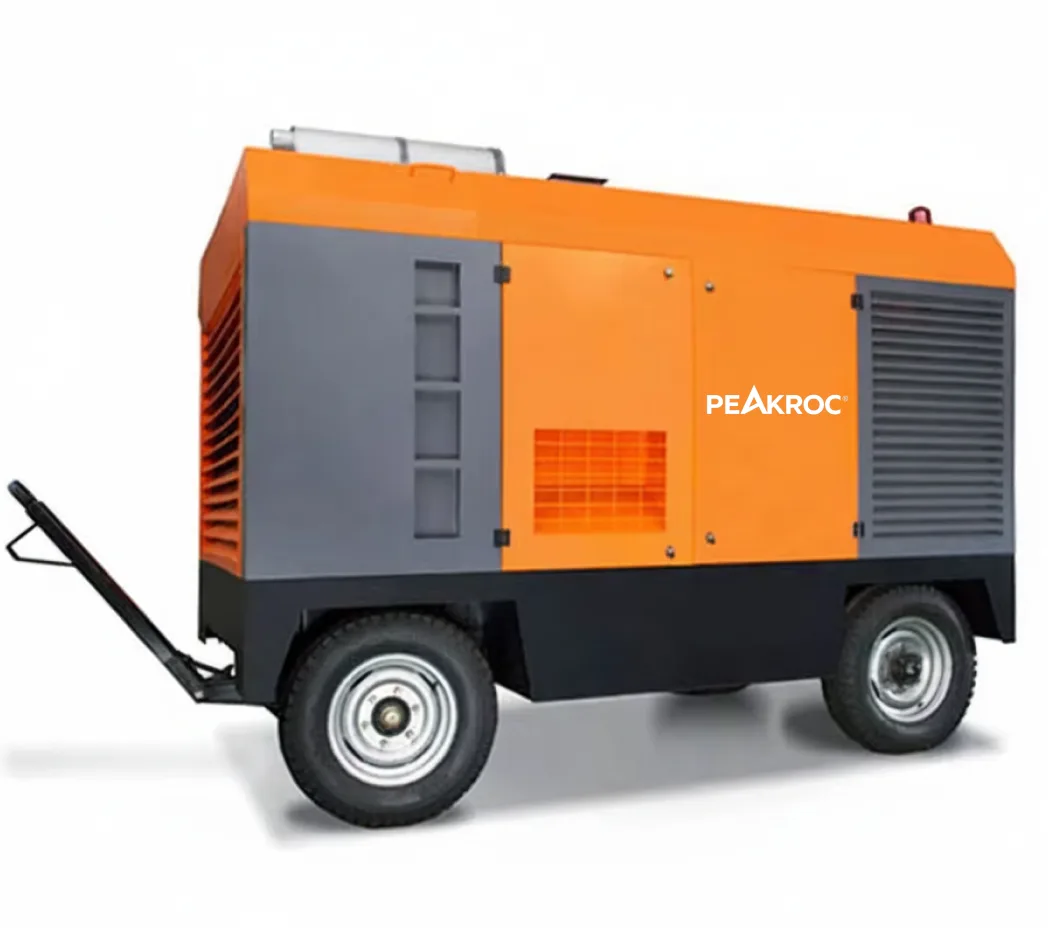
18 bar · 15 m³/min · 154 kW · Cummins
VIEW MORE
10 bar · 32 m³/min · 264 kW · Cummins
VIEW MORE

